



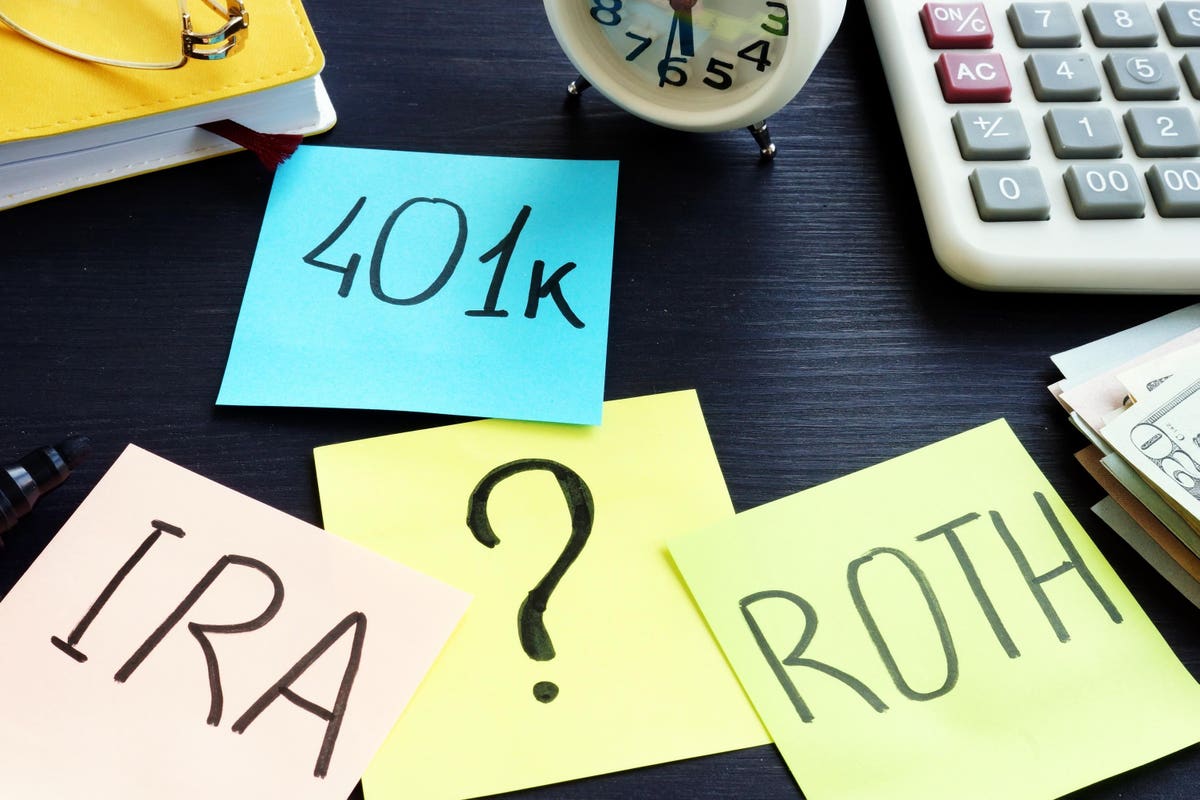
Perhaps you’ve been thinking about converting part of your traditional Individual Retirement Account funds to a Roth IRA. The advantages are tempting: you don’t have to pay taxes on the proceeds from your Roth investments, nor are you required to withdraw them in retirement, as you are with traditional retirement funds. But you’ve hesitated because a conversion would mean “paying back” the tax break you got when you put part of your earnings into a traditional account. Yes, you would have to pay taxes on what you convert and you wonder whether it’s worth it. Much of the answer depends on whether your taxes will be getting higher in the coming years and, because none of us has a crystal ball, the answer isn’t clear.
We have been helping our clients plan for their future retirement needs for decades and we can see how the federal government’s huge deficit might translate into higher taxes down the road. It might be wise to think about paying taxes now, while they are still relatively low, than to risk having to pay more during your retirement years.
Pay Taxes Now or Later
You might consider converting just some of your retirement accounts–traditional IRA, SEP or SIMPLE IRA – to a Roth IRA. Maybe you have an old 401(k) plan at a previous employer or two that is small enough that you could handle paying taxes on. Many people figure it’s worth paying taxes to convert some funds to a Roth because Roth IRAs do not come with required minimum distributions, or RMDs, which are withdrawals that must be made from qualifying retirement accounts at age 73. If you don’t need the money, you don’t have to withdraw it. And, if you pass on a Roth IRA at death, your beneficiary gets to continue those tax-free withdrawals for at least 10 years after that.
Other Rollover Options
If you have access to a Roth 401(k) account at work, then rolling over that money into a Roth IRA avoids any tax bill. The tax-free nature of the Roth assets is preserved, and you have the full range of investment alternatives your Roth IRA offers. You still may receive a tax reporting form (a 1099-R), but the movement of assets from one Roth to another should result in zero additional tax. Note that designated Roth accounts in a 401(k) or 403(b) plan are subject to the RMD rules for 2022 and 2023. But,
for 2024 and beyond, RMDs are no longer required from designated Roth accounts. Also note when you reach age 591⁄2, you can take as much as you want from the account, without paying taxes or penalties, if you have held the account for at least five years. And rolling over has become simpler – you no longer have to first roll over employer money to a regular IRA and then convert it to a Roth IRA. Now the government allows direct rollovers from traditional 401(k)s to Roth IRAs. As with other forms of conversion, you’ll pay taxes on what you convert in the year you do the conversion (but not on any after-tax contributions).
Seek Out Professional Advice Before Proceeding
A decision on converting or not is a complicated one, with big implications for your tax bill, so be sure to consult your tax pro or financial advisor to guide you through the whole process. You certainly don’t want to inadvertently create a “taxable event!”
Understanding your income tax liability, now and in the future, is key to your decision making about a possible Roth conversion – you certainly don’t want to trigger a tax bill now that would be larger than if you waited to withdraw the money in retirement. important to your decision-making about a possible Roth conversion. Nor do you want a large conversion in a single year to catapult you into a higher tax bracket! Another point worth noting: the current tax brackets are set to expire in 2025 and, unless extended, could very well go higher as lawmakers look for ways to lower the national deficit. That’s another reason to consider a conversion now.
Any Downsides to Conversions?
Actually, yes, at least potentially. Because a conversion is treated as ordinary income, it could increase the tax rate you might be paying on capital gains and qualified dividends. You could lose out on a zero capital gains tax and might have to pay higher Social Security taxes. The higher income caused by a Roth conversion could even reduce your Social Security check and increase the amount you pay for Medicare premiums for the year you make the conversion. That’s all the more reason to work with a financial advisor or tax professional before you leap into a Roth conversion.
A Roth IRA offers tax deferral on any earnings in the account. Qualified withdrawals of earnings from the account are tax-free. Withdrawals of earnings prior to age 59 1⁄2 or prior to the account being opened for 5 years, whichever is later, may result in a 10% IRS penalty tax. Limitations and restrictions may apply.
Read the full article here