


You might think that the aging of the Baby Boom generation, with the Gen Xers following close behind, would make geriatric medicine a popular specialty. Almost as attractive, perhaps, as orthopedic surgery. But you’d be very, very wrong.
In 2000, there were only about 10,000 board-certified geriatricians to care for 35 million Americans age 65 or older. That was bad enough. But the shortage has gotten far worse.
Now, there are more than 55 million older Americans. The fastest growing age group is the country is made up of people 85 and older. Yet, the number of geriatricians, doctors trained to specialize in the care of older adults, has fallen to barely 7,400. I’ll do the math for you: That’s one trained geriatrician for roughly every 7,500 seniors.
In short, these doctors are retiring faster than new docs are training to take their place. In 2022, only 177, or 43 percent of geriatric fellowships, were filled. That was the lowest share among 71 specialties.
The Paradox
In a recent essay in the Journal of the American Medical Assn (JAMA), Jerry Gurwitz, who teaches geriatrics at the University of Massachusetts Chan School of Medicine, calls this lack of interest in the face of (pardon the expression) booming demand “paradoxical.”
There seem to be at least three reasons why physicians are so disinterested in caring for older adults: money, status, and mindset.
Gurwitz pointed to relatively low pay, and with good reason. He cited an Association of American Medical Colleges (AAMC) report (paywall) that shows the median income of geriatricians is 9 percent lower than internists and 14% lower than hospitalists.
Separately, in a new, groundbreaking study, economists Joshua Gottlieb of the University of Chicago, Maria Polyakova of Stanford, and colleagues looked at the average incomes of dozens of medical specialties. Unpublished data from that study that Gottlieb shared with me tells roughly the same story.
While physicians earn on average $350,000 annually, geriatricians make only about $258,000. That, of course, is a lot of money. But it is close to the bottom of the income scale for clinical specialists. For comparison, radiologists make almost $550,000, dermatologists earn an average of $655,000, and those orthopedic surgeons? They make an average of $788,000.
“Patients Who Don’t Get Better”
Gurwitz also identified agism among medical students and residents, who often see older patients as near-death and beyond help.
More than a decade ago, when I was researching my book Caring for Our Parents, I asked Dr. David Greer, a geriatrician and former dean of the Brown University medical school, why so few doctors chose this specialty. He put it this way: “Doctors don’t like patients who don’t get better.”
And Greer pointed to a third reason: Status. Imagine going to your med school’s 20th reunion. You have classmates who are neurosurgeons and others who are cancer researchers. And, you? You take care of old people. One geriatrician tells me that her attendings told her, “You are better than that,” when she announced as a resident that she wanted to specialize in care for older adults.
Important Work
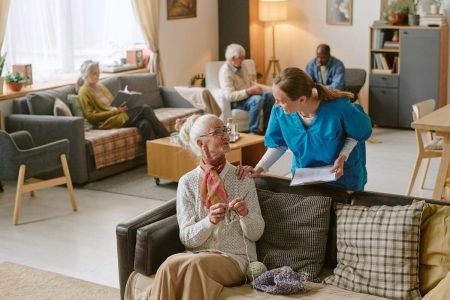
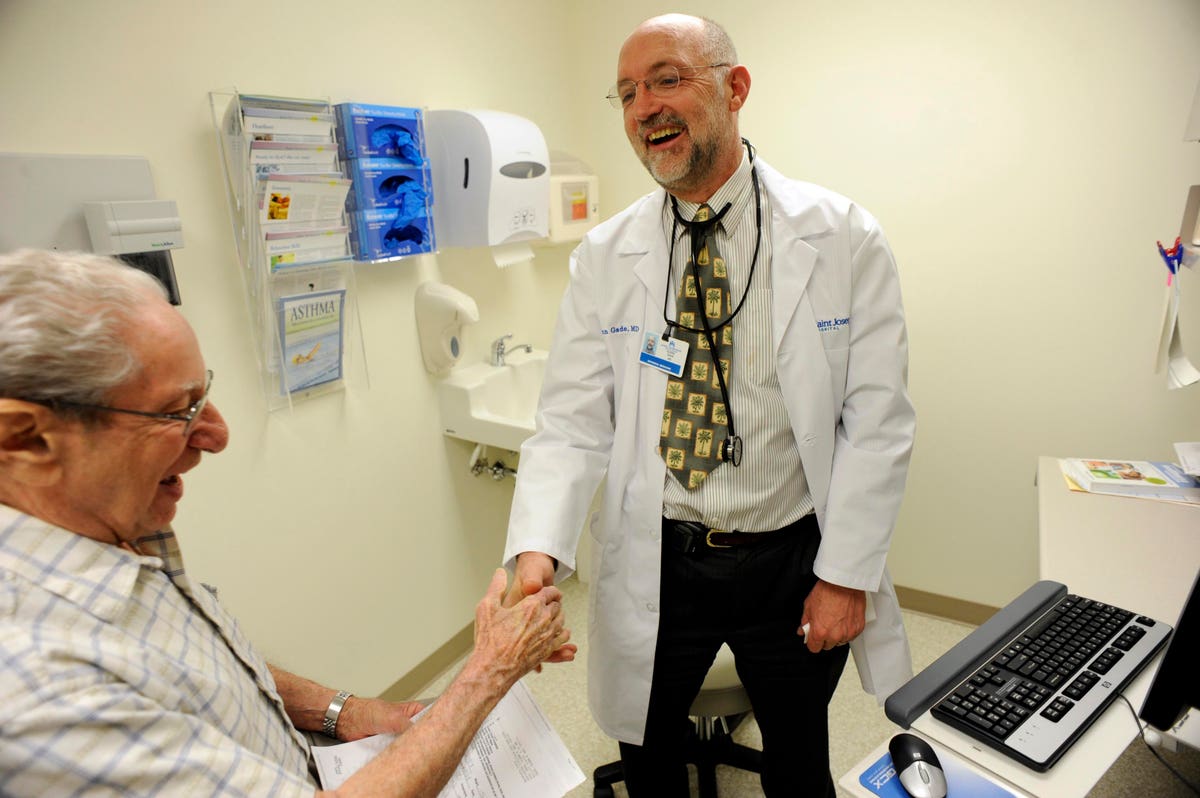
Yet, the work of geriatricians is critically important. Here are just some reasons why:
· They know how older adults react to medications, often in ways that are not well understood since seniors routinely are excluded from drug trials.
· They can separate routine aches and pains from potentially serious conditions. They can distinguish normal age-related memory loss from early-stage dementia.
· They know how to listen to older adults, a skill very different from communicating with with younger patients.
· They are best equipped to coordinate sometimes complex care required by older adults with multiple medical issues.
What will happen if this shortage of geriatricians continues to grow?
One solution may be to require all primary care doctors to take geriatrics training. But that won’t help with those internists who are uninterested in older patients.
Filling The Gap
More likely, much of the care of older adults will be delivered by advance practice nurses and nurse practitioners, many of whom have their own special training in geriatrics. For example, programs such as Nurses Improving Care for Healthsystem Elders (NICHE) have trained tens of thousands of nurses in how to care for older patients
But they too are paid less than their peers. According to one survey, a nurse practitioner with a specialty in geriatrics is paid an average of about $96,000. That’s $32,000 less than a family practice NP. And in the midst of an historic nursing shortage, recruiting RNs and NPs to specialize in geriatrics won’t be easy.
We can’t force physicians to adopt specialties that don’t interest them. But we should recognize the price we all pay for the growing shortage of doctors who can best care for an aging population.
Read the full article here