


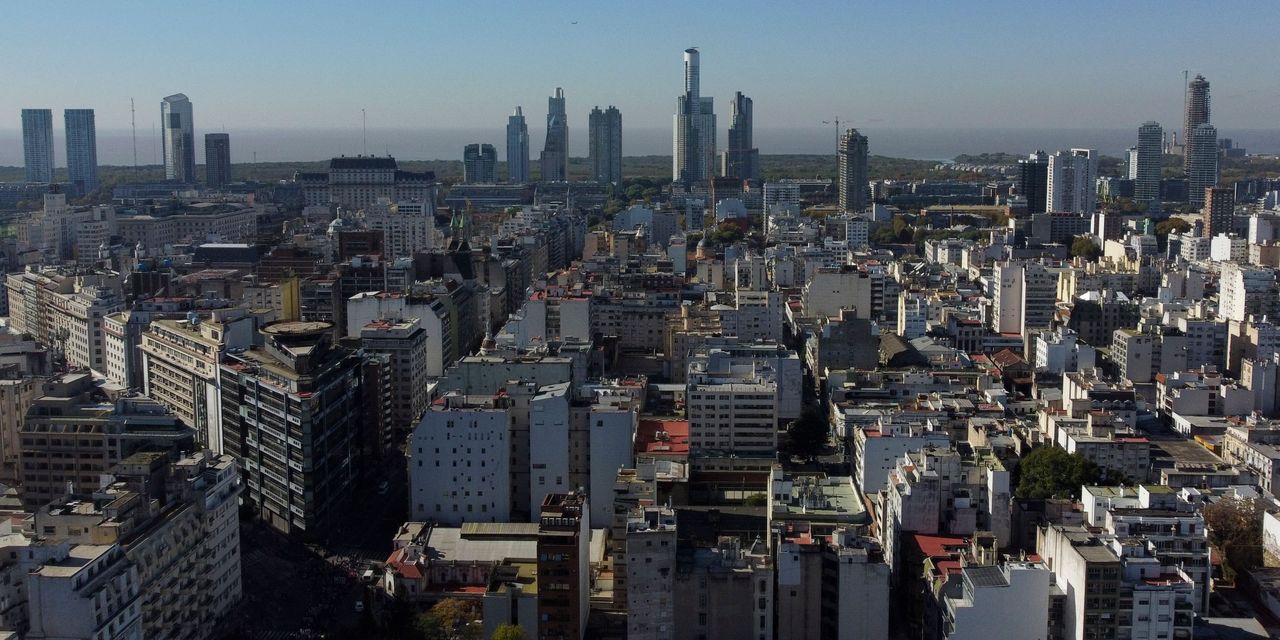
Energy and transportation subsidies absorb close to 5% of Argentina’s gross domestic product.
Luis Robayo/AFP via Getty Images
The Right wins big in a Latin American election, and assets nosedive? Something may be wrong with this picture.
That’s what happened yesterday with Argentina. Benchmark 2030 bonds, already trading at 37 cents on the dollar, fell to 33. The
peso
lost as much as 14% on “parallel” markets (not the official ones where the government decrees its value).
Investors were rattled by upstart Congressman Javier Milei’s first-place finish in Sunday’s presidential primary election, with 30% of the vote. Best described as a far right-populist with Trumpian rhetorical flourishes, Milei’s provocative campaign promises include “dollarizing” Argentina’s long-suffering economy, “burning down” the central bank, and legalizing the sale of bodily organs.
But bearish investors overlook the bigger picture, says Alejo Czerwonko, chief investment officer for emerging markets Americas at UBS Global Wealth Management: Candidates from a more sober center-right party nearly matched Milei with 28%. The incumbent Peronists, whose policies have yielded inflation north of 100% annually and poverty rates near 50%, limped into third at 27%.
“Almost 70% of the vote went against the current administration,” Czerwonko says. “Given the potential for political regime change, bond prices are more likely to go up than down.”
Argentina’s general election comes Oct. 22. If no candidate wins 45%, or 40% with a 10% margin over the second-place finisher, it goes to a runoff in November. That seems likely on primary results.
It isn’t only high-rolling hedge funds that own Argentine bonds. With some $78 billion in hard-currency paper outstanding, the country is included in indexes that push mainstream institutions into the mix, says Carlos de Sousa, emerging market debt strategist at
Vontobel Asset Management.
That debt mountain has already been through one restructuring after the current government defaulted in 2020. The deal involved almost no “haircut” to principal. It did grant a four-year holiday on principal payments and reduced interest to less than 1% a year.
Principal payments start again next July. Both de Sousa and Czerwonko expect a second restructuring then, or sometime in 2025 or 2026. The bet is that this next negotiation reaches a settlement higher than current value. “They may settle at 50 cents,” de Sousa says. “I think it makes sense to hold the bonds.”
The International Monetary Fund, to whom Argentina owes an additional $44 billion, should also go easy on the next Buenos Aires administration, particularly if it’s shifting toward market reform. The country represents some 30% of the IMF’s loan book, which managers in Washington will hardly want to write off.
“The Fund is also waging a longstanding battle against its poor reputation in emerging markets, particularly Latin America,” Czerwonko adds. “They will sit down with whoever wins.”
Argentina, whatever its other problems, is a checks-and-balances democracy. Milei’s hastily constructed Freedom Advances party fared poorly in recent regional elections. Even if he wins, he will likely need a Congressional coalition with the center-right Republican Proposal bloc, political heirs to former President Mauricio Macri, to enact legislation.
“Milei has no natural base beyond his own charisma,” says Ryan Berg, director of the Americas program at the Center for Strategic and International Studies. “No one will have a legislative majority.”
Milei is already walking back his dollarization promise to a gradual goal over the course of a presidential term, de Sousa notes. Other Latam countries—Ecuador, El Salvador, Panama—have chosen this route to tame inflation. “It has its pluses and minuses,” he assesses.
Argentina’s next government will have one more advantage: It can’t make things much worse. One low-hanging reform fruit would be abolishing the mandated exchange rate; black or grey markets pay more than twice as many pesos for a dollar. The Peronist incumbents started down that path themselves with an 18% devaluation as soon as they heard the primary results.
Shrinking a bloated state will be tougher. Some 40% of Argentine workers depend on the public sector, Berg estimates. Energy and transportation subsidies absorb close to 5% of gross domestic product. Strikes by powerful unions and social organizations have stopped previous cutbacks in their tracks. “I’ve been there when Buenos Aires shuts down,” Berg says. “There is no alternative but to walk home.”
Conditions may just have gotten bad enough for this time to be different, though. “There’s a greater sense of urgency and crisis now than when Macri was in power,” Czerwonko says. “Maybe there’s more willingness to tolerate short-term pain for longer term gain.”
Maybe enough to invest in bonds at 33 cents anyway.
Write to [email protected]
Read the full article here