


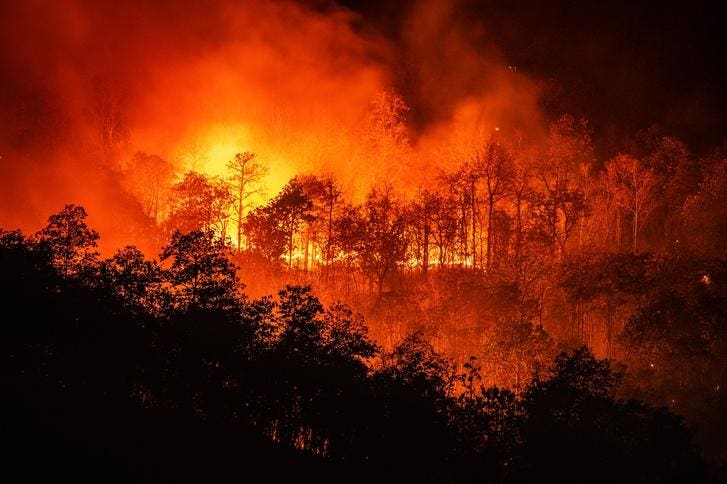
Another summer, another stark reminder of the reality of climate change. Wildfires on Maui caused widespread destruction and the highest death toll in more than 140 years. The southern US buckled under a brutal and historic heat wave. Flash floods inundated Vermont and other northern states. And, hurricane season has only begun, potentially fueled by record high ocean temperatures in the Gulf of Mexico. Nature sends almost daily reminders that climate change is real and that it takes a severe toll on people, their livelihoods and their lives.
The burden of climate change and the associated natural disasters that have become more common and more severe is unevenly felt. Black and Latino families, for example, are much more likely to be displaced by natural disasters – hurricanes, floods, fires, tornadoes and other events such as extreme cold or heat — than white families. And, when they have to leave their home, the impact from that displacement is much more severe for Black and Latino families as well as many families of other and multiple races than for white families. There is no doubt that climate change exacerbates existing racial and ethnic inequalities.
The U.S. Census has collected information on the financial, health and housing situation of households since the start of the pandemic with its Household Pulse Survey. For the past six months, this survey has also asked people whether they have been displaced by a natural disaster – an extreme impact of climate change. On average, 1.5% of people over the first six months of 2023 said that they had been displaced in the prior twelve months. Yet, that share was 1.8% for Latinos, 2.4% for Black people and 2.3% for people of other or multiple races and ethnicities. Put differently, there would have been 236,000 fewer Black displaced people in June 2023 if they had the same likelihood of displacement as white families. Hundreds of thousands more Black and Latino people as well as people of other and multiple races felt the extreme effects of climate change due to pervasive racial and ethnic inequities.
It is not just that the likelihood of being impacted by natural disasters is greater for many people of color. The consequences of being displaced are also more severe. For example, 21.8% of Latinos, 28.7% of people of other or multiple race and ethnicities and 15.1% of Black people never returned to their homes, while this was the case for 12.1% of white people. And, Black people and Latinos as well as adults of other or multiple races and ethnicities were vastly more likely to experience food shortages, lack of water and unsanitary conditions, among other effects of displacement, than was the case for white adults (see Figure below). Not only is the chance of being displaced almost twice as high for Black people, for instance, but so is the chance of suffering from food shortages and a lack of water, when they are displaced, as compared to white people. As is the case in many other parts of everyday life, Black people, Latinos and people of other and multiple races face massive additional costs compared to white adults when disaster strikes.
Systematically lower incomes are likely an important factor, though not the only one, that make it more difficult to weather an emergency. Having sufficient incomes pay for things such as transportation and new housing when being displaced by a natural disaster. People with less income then face more dire consequences.
But, that is not the whole story. For example, Black people in households with incomes from $35,000 to $99,999 had a higher chance of facing food shortages – 53.8% — than white people in households with incomes of less than $35,000 – 45.9%.
Another important aspect then is the fact that Black households, and people of other races and ethnicities, are much less likely to have emergency savings than is the case for white households. After all natural disasters are not the only part of life that takes a larger financial toll on Black and Latino families as well as on families of other and multiple races. These additional costs from greater and more widespread risk exposure, for instance, in the labor market and in health care, make it much harder to put money away. Black people, Latinos and those of other or multiple races then are much more vulnerable when disaster strikes again.
My colleague Justin Dorazio also points out that public assistance in the event of a disaster is unevenly distributed by race and ethnicity. He cites several studies that show that Black survivors of natural disasters receive less government assistance from the Federal Emergency Management Agency (FEMA) than white survivors, even when the losses and damages from a disaster are comparable to each other. This puts greater strains on the wealth of Black households when they are affected by a natural disaster, even as that wealth is already much lower than that of white households.
In the end, the experience of Black and Latino households as well as those of other and multiple races reflects experiences in other areas of life such as the labor market and health care. They have greater needs for savings because of structural discrimination, but they have a lot fewer savings in large part because of the pervasiveness of the impact of said structural discrimination.
The uneven experiences in natural disasters by race and ethnicity – greater likelihood of being displaced and higher costs associated with displacement – are then a stark reminder that policy needs to address the differences in costs of disasters and in wealth. Tackling the costs here means both addressing the underlying causes of climate change and its differential impact by race and ethnicity. And, countering the uneven distribution of wealth means helping Black and Latino households as well as households of other or multiple races and ethnicities to build wealth faster. It also means to take a race conscious approach to disaster recovery. Justin Dorazio, for example, provides several clear steps to reduce the racial and ethnic disparities in FEMA’s response to natural disasters, ranging from reducing paperwork hurdles when applying and receiving assistance to prioritizing investments in vulnerable communities in order to increase climate resilience there. Climate change and its effects are a reality of our lives. It also has starkly different effects by race and ethnicity. Policymakers must take an equity-oriented approach to addressing and mitigating climate disasters.
Read the full article here