


• Home
  • News
  • Personal Finance
    • Savings
    • Banking
    • Mortgage
    • Retirement
    • Taxes
    • Wealth
  • Make Money
  • Budgeting
  • Burrow
  • Investing
  • Credit Cards
  • Loans

Subscribe to Updates

Get the latest finance news and updates directly to your inbox.

Top News

5 Signs You’re Saving Too Much for Retirement

February 3, 2026

How to Get Your Cut of Amazon’s New $1 Billion Returns Settlement

February 3, 2026

Feeling Stuck in the Weeds? Here’s How to Break Free.

February 3, 2026
Facebook Twitter Instagram
Trending
  • 5 Signs You’re Saving Too Much for Retirement
  • How to Get Your Cut of Amazon’s New $1 Billion Returns Settlement
  • Feeling Stuck in the Weeds? Here’s How to Break Free.
  • I Was Burning Out. Then One Simple Question Gave Me a Solution
  • Why European Companies Are Buying Up Premium U.S. Domains
  • Why the Wrong Investor Is More Dangerous Than Running Out of Cash
  • The “Bomb Cyclone” Recovery Guide: What Insurance Covers (and What It Doesn’t)
  • 15 Soft Skills That Are Your Most Valuable Asset in the Workplace (and How to Show Them Off)
Tuesday, February 3
Facebook Twitter Instagram
iSafeSpend
Subscribe For Alerts
  • Home
  • News
  • Personal Finance
    • Savings
    • Banking
    • Mortgage
    • Retirement
    • Taxes
    • Wealth
  • Make Money
  • Budgeting
  • Burrow
  • Investing
  • Credit Cards
  • Loans
iSafeSpend
Home » Treasury Yields Are Moving. Where They’re Going Next.
Investing

Treasury Yields Are Moving. Where They’re Going Next.

News RoomBy News RoomSeptember 4, 20230 Views0
Facebook Twitter Pinterest LinkedIn WhatsApp Reddit Email Tumblr Telegram

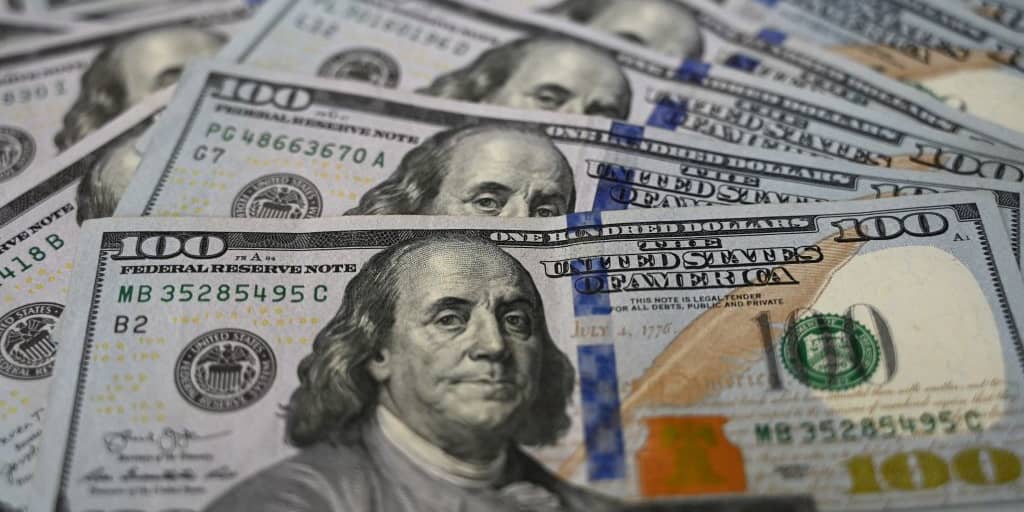
The Fed’s long campaign of rate hikes may soon come to an end.


AFP via Getty Images

With the stock market closed for Labor Day, it could be a good time to take a step back and look at what’s happening with U.S. government bonds.

There are usually two main drivers for bond yields, which move inversely to prices. One is short-term interest rates, set by the Federal Reserve. The other is the outlook for inflation, since consumer-price gains erode the returns of interest-bearing securities. Those two are, of course, related, because the Fed is in charge of controlling inflation.

Since the Fed started raising interest rates from near zero to more than 5% today, bond yields have risen dramatically. Theoretically, lending the government money for a longer period should produce a higher rate or return, so when short-term rates go up, long-term rates should go up as well, staying higher than shorter-term notes. That hasn’t happened quite as expected, but more on that later. 

However, bond yields were going up even before the Fed started raising rates in March 2022. They were rising in 2021, when massive government stimulus ensured that the economy was going to take off again after the pandemic.

In fact, the 10-year Treasury bond is on track for a third straight year of losses in 2023. That hasn’t happened in 250 years of U.S. history, analysts at Bank of America pointed out Sept. 1. 

One strange thing that has emerged over the past few years–the unexpected thing mentioned above–is an inverted yield curve. The return on the 10-year bond is lower than the interest rate on the two-year. That reflects investors’ expectations that the Fed will raise rates in the short term to get inflation back under control, and then it will be able to start lowering them again later. 

An inverted curve is often considered a signal of a coming recession, since the Fed usually lowers rates to support growth. But it isn’t necessarily a sign of imminent economic collapse.

Expectations for longer term interest rates have risen again recently now that it looks like inflation is coming down without the help of a sharp economic slowdown, implying that the Fed will keep rates higher for longer. The announcement that the government will increase the size of its debt auctions has also pushed yields higher of late.

The yield on the 10-year Treasury closed at 4.186% on Friday. It had initially fallen earlier in the day on data showing rising unemployment, but finished higher after another report showed economic strength. Back in April, when the economic outlook seemed less solid, the yield was as low as 3.3%.

Whether yields continue to go up, or if 10-year bonds can reverse three years of declines, depends, as always, on what the Fed does. But Tan Kai Xian, an analyst at Gavekal Research, says there are good reasons to think bonds will provide better returns than stocks in the near future.

If rising unemployment is a sign of a weakening economy, investors may sell off stocks as company earnings deteriorate. Similarly, if rising unemployment gives the Fed room to cut rates, that’s also a boost for bonds. If, on the other hand, the labor market keeps adding slack without a recession, Treasuries may continue to perform poorly, he said. 

“But history does not favor such a soft landing scenario,” Xian wrote.

Bottom line: It’s very unusual for bond yields to rise—or for bond prices to fall—for as long a spell as they have. Recent events have pushed yields even higher. But if the Fed really is close to finishing its campaign of rate hikes, bonds should soon reverse their losing streak.

Write to Brian Swint at [email protected]

Read the full article here

Share. Facebook Twitter Pinterest LinkedIn Tumblr Email

Related Articles

I Was Burning Out. Then One Simple Question Gave Me a Solution

Investing February 3, 2026

How This Writing Practice Transformed My Direction in Life

Investing February 2, 2026

Comparing AI Models With This Tool Can Save Your Business Time and Money

Investing February 1, 2026

The Essential Explainer for All Franchise-Related Acronyms

Investing January 31, 2026

Why Entrepreneurs Should Think Like Bitcoin Miners

Investing January 30, 2026

4 Documentaries Every Serious Investor Should Watch

Investing January 29, 2026
Add A Comment

Leave A Reply Cancel Reply

Demo
Top News

How to Get Your Cut of Amazon’s New $1 Billion Returns Settlement

February 3, 20260 Views

Feeling Stuck in the Weeds? Here’s How to Break Free.

February 3, 20260 Views

I Was Burning Out. Then One Simple Question Gave Me a Solution

February 3, 20260 Views

Why European Companies Are Buying Up Premium U.S. Domains

February 3, 20260 Views
Don't Miss

Why the Wrong Investor Is More Dangerous Than Running Out of Cash

By News RoomFebruary 3, 2026

Entrepreneur Key Takeaways Taking money without alignment on values, trust, timing and working style often…

The “Bomb Cyclone” Recovery Guide: What Insurance Covers (and What It Doesn’t)

February 2, 2026

15 Soft Skills That Are Your Most Valuable Asset in the Workplace (and How to Show Them Off)

February 2, 2026

Why Entrepreneurs Are Choosing StackSkills Unlimited at $19.97

February 2, 2026
About Us

Your number 1 source for the latest finance, making money, saving money and budgeting. follow us now to get the news that matters to you.

We're accepting new partnerships right now.

Email Us: [email protected]

Our Picks

5 Signs You’re Saving Too Much for Retirement

February 3, 2026

How to Get Your Cut of Amazon’s New $1 Billion Returns Settlement

February 3, 2026

Feeling Stuck in the Weeds? Here’s How to Break Free.

February 3, 2026
Most Popular

Foundations Of Health And Longevity In Retirement

December 6, 20256 Views

Spend Less and Stay Productive with This MacBook Air for Less Than $250

November 30, 20254 Views

America Has a New Favorite Mattress Brand — but There’s a Hitch to Maximizing Your Satisfaction

December 6, 20253 Views
Facebook Twitter Instagram Pinterest Dribbble
  • Privacy Policy
  • Terms of use
  • Press Release
  • Advertise
  • Contact
© 2026 iSafeSpend. All Rights Reserved.

Type above and press Enter to search. Press Esc to cancel.