



Nobody really cares where you graduated from college after you earn a degree and start working in your chosen field. You’ll list your school name on your resume and there’s a chance you’ll get asked about your college experience in job interviews, but the importance of where you went to school fades with each year until it doesn’t really matter at all.
With that in mind, most of us would be a lot better off avoiding the crazy prices some colleges want for pretty basic degrees. And really, most of us would be better off looking for ways to get a high-quality education with the lowest possible out-of-pocket cost anyway.
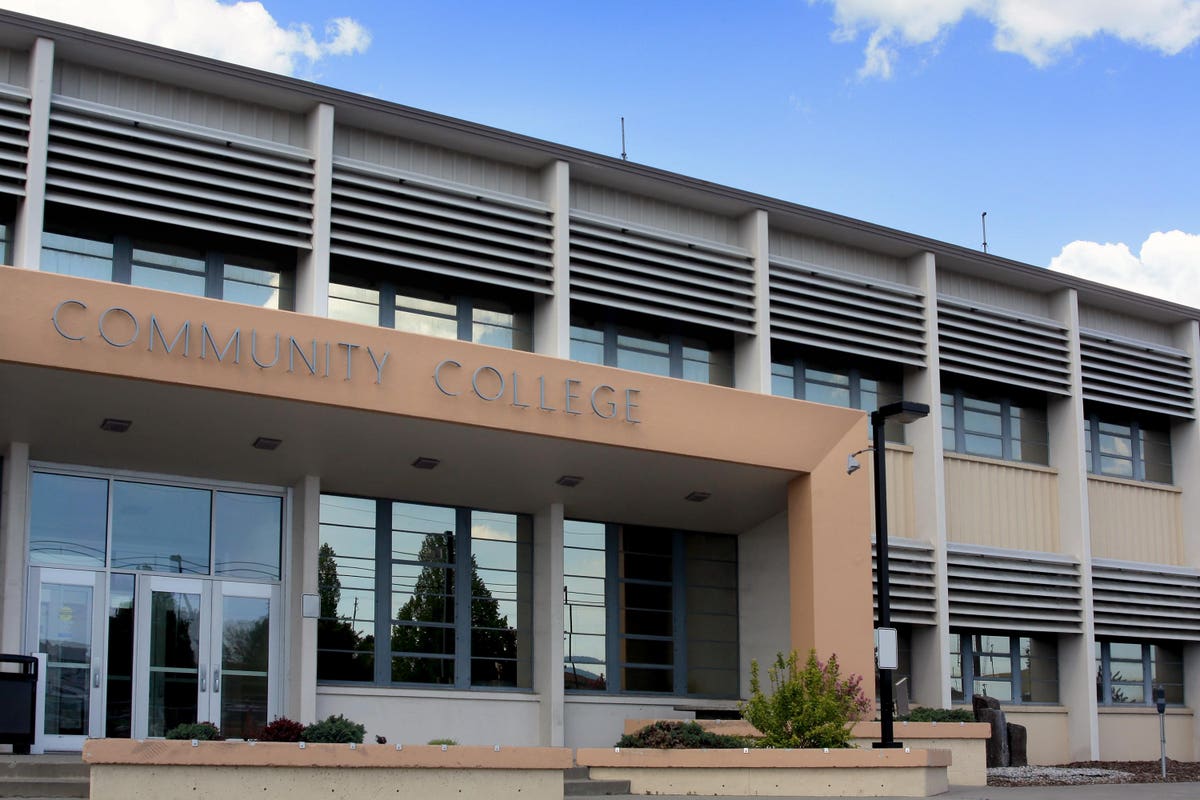
Politicians in some states are starting to agree, and as a result, some community colleges have started offering Bachelor’s degrees as a result. Based on the momentum these programs seem to have, it also appears that being able to earn a Bachelor’s degree at a community school could become even more common in the coming years.
Which Community Colleges Offer Bachelor’s Degrees?
A 2021 law in the state of California helped pave the way to more community colleges offering four-year degrees in the state. Based on this legislation, the state can approve up to 30 community college Bachelor’s programs each year.
In turn, community colleges that are part of the California Community College system offer (or will soon offer) a range of four-year programs in subjects like Biomanufacturing, Dental Hygiene, Mortuary Science, and Respiratory Care. These degrees can be earned at community colleges throughout the state, including Los Angeles Valley College, San Diego City College, San Diego Mesa, and Ventura College, to name a few of the 27 participating schools in this college system alone.
The Maricopa County Community College District based out of Tempe, Arizona is another trailblazing system when it comes to offering four-year degrees. At the moment, Maricopa Community Colleges already have Bachelor’s degree programs in areas of study like Business Administration, Data Analytics and Programming, Information Technology, and Registered Nurse to Bachelor of Science in Nursing (RN-BSN).
Schools in this system have also announced new programs for fall of 2024 and 2025 already, including a Nursing RN-BSN (BSN) at GateWay Community College, a Business Administration—Accounting (BBA) degree at Paradise Valley Community College, a Business Administration—Management (BBA) degree at Scottsdale Community College, and an Artificial Intelligence and Machine Learning (BS) degree at Chandler-Gilbert Community College.
Some other community colleges that operate outside of major college systems also offer four-year degree programs as well. For example, Lorain Community College in Elyria, Ohio currently offers a Bachelor of Applied Science in Microelectronic Manufacturing (MEMS) and a Bachelor of Applied Science Degree in Smart Industrial Automation Systems Engineering Technology.
Benefits Of Earning A Bachelor’s Degree At A Two-Year School
The examples above provide a glimpse of just some of the community colleges offering four-year degrees or working on them as we speak, but there are others out there as well. Aside from the fact that most employers and hardly anyone else will care where you went to college in the first place, there are plenty of reasons to consider these schools and programs for yourself or your dependents.
Not surprisingly, the first potential benefit is cost. CollegeBoard data shows that the average cost of tuition and fees at public, four-year colleges in-state worked out to $10,950 for the 2022-23 school year, whereas the cost of a public two-year school worked out to $3,860 per year for tuition and fees alone.
If you could earn a Bachelor’s degree in a popular field of study like Business Administration or Nursing for half the cost and potentially even live at home for even more savings, you would almost be crazy if you didn’t at least consider it.
There are also proximity issues to contend with that can make earning a four-year degree at community college a better deal. For example, community colleges that are part of a larger state college system can help some students attend their desired program while living at home instead of having to move to a city that has a traditional college or university that offers the same four-year program. Realize that room and board at a traditional four year college typically exceeds the cost of tuition each year as well.
Attending community college to earn a four-year degree can also give new students a “softer landing” as they transition from high school or work life into their college years, especially when you compare it to the experience of moving into dorms on a large college campus. Community colleges are often smaller and have a more neighborly feel than bigger schools, and many students at two-year schools are able to live at home while studying and working part-time.
Bottom Line
Community colleges offer excellent value when it comes to the two-year degrees they have offered all along. After all, a range of two-year degrees can provide exceptional return-on-investment over time, including degrees in Radiation Therapy, Nuclear Medicine Technician, Web Development, Respiratory Therapy, and more. This is partly because so many two-year degrees lead to jobs in relatively high-paying fields, but it’s also because community college costs less in the first place.
Two-year schools offering four-year degrees is one of the best ideas I have heard in a while, mostly because it opens the door to even better opportunities for students who want to earn a four-year degree and don’t care if they get to attend a prestigious institution. The fact is, earning a Bachelor’s degree at a community college instead of a four-year college can lead to the same career opportunities down the line in many fields, but with a lot less student loan debt to show for it.
Read the full article here