

• Home
  • News
  • Personal Finance
    • Savings
    • Banking
    • Mortgage
    • Retirement
    • Taxes
    • Wealth
  • Make Money
  • Budgeting
  • Burrow
  • Investing
  • Credit Cards
  • Loans

Subscribe to Updates

Get the latest finance news and updates directly to your inbox.

Top News

20 New Cars That Are Piling up on Dealership Lots (Which Can Mean Lower Prices This Time of Year)

December 26, 2025

Here’s What Workers Say Matters Most in a Job in 2026 and What They’ll Do to Get It

December 26, 2025

Why Governments Are Rethinking Citizenship by Investment Programs

December 26, 2025
Facebook Twitter Instagram
Trending
  • 20 New Cars That Are Piling up on Dealership Lots (Which Can Mean Lower Prices This Time of Year)
  • Here’s What Workers Say Matters Most in a Job in 2026 and What They’ll Do to Get It
  • Why Governments Are Rethinking Citizenship by Investment Programs
  • How Your Small Business Can Save More Money Through the One Big Beautiful Bill Act
  • Expand Your International Reach With This Special Lifetime Babbel Offer
  • How to Ensure AI Is Working for You and Not Against You
  • These 5 Common Items Could Get You Flagged by TSA This Holiday Season
  • Don’t Let These 7 Home Trends Tank Your Sale Price
Friday, December 26
Facebook Twitter Instagram
iSafeSpend
Subscribe For Alerts
  • Home
  • News
  • Personal Finance
    • Savings
    • Banking
    • Mortgage
    • Retirement
    • Taxes
    • Wealth
  • Make Money
  • Budgeting
  • Burrow
  • Investing
  • Credit Cards
  • Loans
iSafeSpend
Home » Treasury Yields Are Headed Higher. The Stock Market Won’t Like It.
Investing

Treasury Yields Are Headed Higher. The Stock Market Won’t Like It.

News RoomBy News RoomSeptember 23, 20230 Views0
Facebook Twitter Pinterest LinkedIn WhatsApp Reddit Email Tumblr Telegram

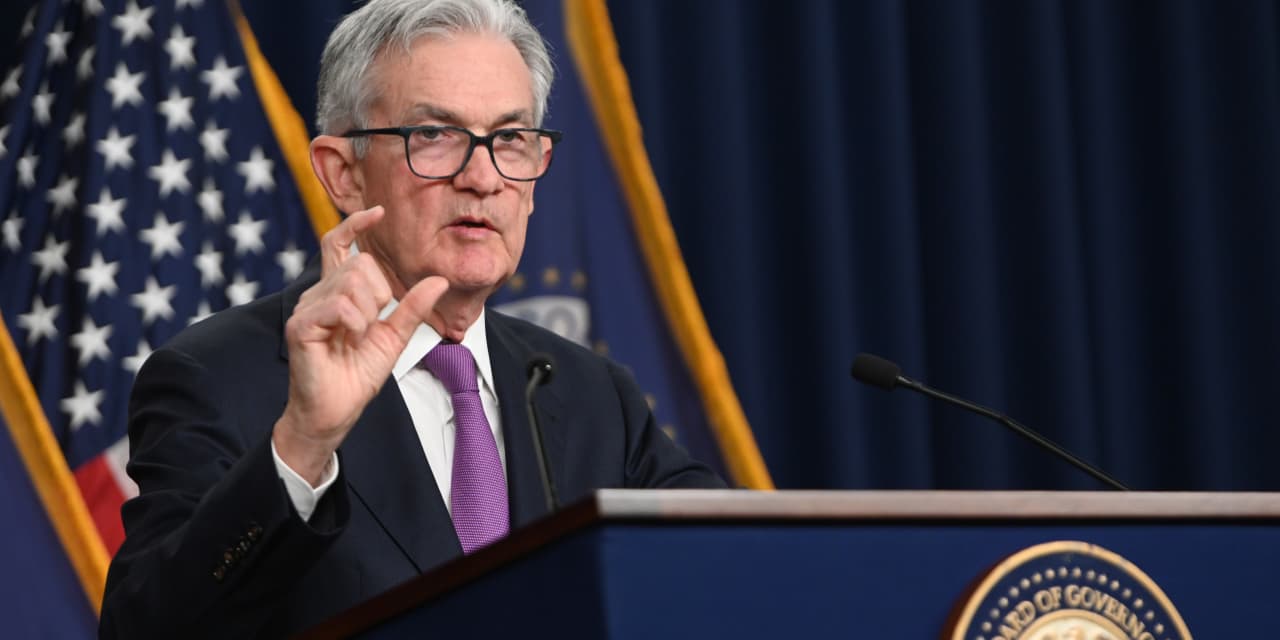
Federal Reserve Chairman Jerome Powell has said that the central bank will proceed cautiously in raising rates.


Chen Mengtong/China News Service/VCG/Getty Images)

It’s back to the future for interest rates.

The benchmark 10-year Treasury note yield briefly breached the 4.5% level this past week, which was widely noted to be the highest level since 2007. That makes it seem as if this were something extraordinary. In actuality, it represented nothing more than a return to normalcy.

This 4.5% yield represents the long-term average for U.S. government debt, and by that we mean really long term, going all the way back to 1790. Credit for that observation goes to Jim Reid, Deutsche Bank’s head of global fundamental credit strategy.

“In some ways, this could be seen as a concern, since we’re ‘only’ now at normal historical levels, despite the fact inflation is still elevated and record peacetime deficits are predicted for the rest of your careers, however old you are,” he commented in one of his always informative Chart of the Day notes.

“The good news is that at least value has returned. It’s going to be much more difficult for longer-term investors to lose money in Treasuries now that it was for most of the last decade in both nominal and, to a lesser degree, real terms,” he added.

But that’s after stunning losses in supposedly “riskless” government securities, some of which sell at less than 50% their face value. With a nod to our Deadhead central bank chief, what a long, strange trip it’s been—and a bad trip for those who own the 1.25% Treasury bonds due on May 15, 2050, which closed on Thursday at a price of 48.186, more than half off their original price just over three years go.

But the question remains, are we there yet? While the Federal Reserve, as expected, held its federal-funds target unchanged, at 5.25% to 5.5%, at its policy meeting last week, it also confirmed that it intended to hold interest rates higher for longer.

As the aforementioned Fed chairman, Jerome Powell, emphasized, policy makers would proceed cautiously. In terms of the Federal Open Market Committee’s updated Summary of Economic Projections, that could mean one more quarter-point hike in its fed-funds target this year, to a 5.6% midpoint. But for 2024, the FOMC median projection now is for a total of a half-point rate reduction by year end (presumably in quarter-point increments), to 5.1%, rather than a full point.

That’s based on economic projections that envisage continued growth and a further easing in inflation with a smaller uptick in unemployment than previously anticipated for next year, a fortuitous combination characterized as “aspirational” by J.P. Morgan chief economist Bruce Kasman in a Bloomberg television interview.

Given short-term rates well into the 5% range through 2024, last week’s 4.5% on the Treasury 10-year note doesn’t seem to be its ultimate destination. History shows that the fed-funds rate and the 10-year Treasury have tended to peak around the same level, according to Jawad Mian, the founder and managing editor at Stray Reflections, an independent global macro research and trading advisory.

What’s different this time is that the Fed’s previous quantitative easing has lowered the so-called term premium (the extra yield for holding longer maturities, analogous to the equity risk premium for stocks) by perhaps a full percentage point. As the Fed reduces its holdings of Treasury securities at the same time the federal government faces deficits of $18.8 trillion over the coming decade, according to Congressional Budget Office estimates, that term premium should rise and lift yields, he writes in a client note.

Chris Verrone, head of Strategas’ technical and macro research team, also sees the 10-year Treasury headed to 5.1%-5.2% on his charts after its breakout above its previous peak of 4.36%. Moreover, he sees the equity market becoming uncomfortable with the level of interest rates.

Cyclical stocks have ceased outperforming defensive names in the past month, he points out in a client note. And while the
S&P 500 index
remains well above its August lows and its 200-day moving average, bolstered by the Magnificent Seven big-cap tech names, the equal-weighted S&P 500 has broken below both marks.

Investors weaned on historically low interest rates now have to deal with money that no longer costs nothing, or even less after counting inflation.

Write to Randall W. Forsyth at [email protected]

Read the full article here

Share. Facebook Twitter Pinterest LinkedIn Tumblr Email

Related Articles

How Your Small Business Can Save More Money Through the One Big Beautiful Bill Act

Investing December 26, 2025

How to Turn a Cyberattack Into a Strategic Advantage

Investing December 25, 2025

How to Turn Skeptics Into Your Biggest Brand Advocates

Investing December 24, 2025

7 Hidden Costs That Are Eating Up Your Small Business

Investing December 23, 2025

Get Thousands of Business and Tech Courses for Just $20 (Total)

Investing December 22, 2025

How Businesses Should Rethink Video Strategy for 2026

Investing December 21, 2025
Add A Comment

Leave A Reply Cancel Reply

Demo
Top News

Here’s What Workers Say Matters Most in a Job in 2026 and What They’ll Do to Get It

December 26, 20250 Views

Why Governments Are Rethinking Citizenship by Investment Programs

December 26, 20250 Views

How Your Small Business Can Save More Money Through the One Big Beautiful Bill Act

December 26, 20250 Views

Expand Your International Reach With This Special Lifetime Babbel Offer

December 26, 20250 Views
Don't Miss

How to Ensure AI Is Working for You and Not Against You

By News RoomDecember 25, 2025

Entrepreneur Key Takeaways Many entrepreneurs have fallen for the “automation illusion.” They believe buying the…

These 5 Common Items Could Get You Flagged by TSA This Holiday Season

December 25, 2025

Don’t Let These 7 Home Trends Tank Your Sale Price

December 25, 2025

MacBook Air M1 Deal Helps Entrepreneurs Cut Costs Without Sacrificing Performance

December 25, 2025
About Us

Your number 1 source for the latest finance, making money, saving money and budgeting. follow us now to get the news that matters to you.

We're accepting new partnerships right now.

Email Us: [email protected]

Our Picks

20 New Cars That Are Piling up on Dealership Lots (Which Can Mean Lower Prices This Time of Year)

December 26, 2025

Here’s What Workers Say Matters Most in a Job in 2026 and What They’ll Do to Get It

December 26, 2025

Why Governments Are Rethinking Citizenship by Investment Programs

December 26, 2025
Most Popular

Car Insurers Are Charging Single and Divorced People More. Is This Fair? Here’s What to Do Either Way.

December 19, 20255 Views

Here’s How I Make $1,000 a Month Selling Thrift Store Finds Online

December 20, 20253 Views

AI financial advisors are coming and they may outperform the humans guarding your money

December 20, 20253 Views
Facebook Twitter Instagram Pinterest Dribbble
  • Privacy Policy
  • Terms of use
  • Press Release
  • Advertise
  • Contact
© 2025 iSafeSpend. All Rights Reserved.

Type above and press Enter to search. Press Esc to cancel.