

• Home
  • News
  • Personal Finance
    • Savings
    • Banking
    • Mortgage
    • Retirement
    • Taxes
    • Wealth
  • Make Money
  • Budgeting
  • Burrow
  • Investing
  • Credit Cards
  • Loans

Subscribe to Updates

Get the latest finance news and updates directly to your inbox.

Top News

5 Signs You’re Saving Too Much for Retirement

February 3, 2026

How to Get Your Cut of Amazon’s New $1 Billion Returns Settlement

February 3, 2026

Feeling Stuck in the Weeds? Here’s How to Break Free.

February 3, 2026
Facebook Twitter Instagram
Trending
  • 5 Signs You’re Saving Too Much for Retirement
  • How to Get Your Cut of Amazon’s New $1 Billion Returns Settlement
  • Feeling Stuck in the Weeds? Here’s How to Break Free.
  • I Was Burning Out. Then One Simple Question Gave Me a Solution
  • Why European Companies Are Buying Up Premium U.S. Domains
  • Why the Wrong Investor Is More Dangerous Than Running Out of Cash
  • The “Bomb Cyclone” Recovery Guide: What Insurance Covers (and What It Doesn’t)
  • 15 Soft Skills That Are Your Most Valuable Asset in the Workplace (and How to Show Them Off)
Tuesday, February 3
Facebook Twitter Instagram
iSafeSpend
Subscribe For Alerts
  • Home
  • News
  • Personal Finance
    • Savings
    • Banking
    • Mortgage
    • Retirement
    • Taxes
    • Wealth
  • Make Money
  • Budgeting
  • Burrow
  • Investing
  • Credit Cards
  • Loans
iSafeSpend
Home » Inflation is ‘always going to be a risk’ with the U.S. economy now fundamentally changed, ADP chief economist says
News

Inflation is ‘always going to be a risk’ with the U.S. economy now fundamentally changed, ADP chief economist says

News RoomBy News RoomOctober 6, 20230 Views0
Facebook Twitter Pinterest LinkedIn WhatsApp Reddit Email Tumblr Telegram

Inflation is “always going to be a risk” in the U.S. due to structural changes in the labor market, according to Nela Richardson, chief economist at payroll processing firm ADP.

Last year, with inflation spiraling out of control across major economies in the aftermath of the Covid-19 pandemic, the U.S. Federal Reserve began a run of interest rates hikes that would take the Fed funds rate target range from 0.25-0.5% in March 2022 to a 22-year high of 5.25-5.5% in July 2023.

Prior to that, interest rates had remained low for a decade as central banks around the world looked to stimulate their respective economies in the wake of the global financial crisis.

Speaking to CNBC’s “Squawk Box Europe” on Friday, Richardson said the past 10 years of U.S. economic growth had been driven by low interest rates as policymakers focused on negating recession in the absence of inflationary pressures.

“This was an economy built on very close to zero interest rates for 10 years of economic expansion, and that was OK because inflation was super low,” she said.

“But now inflation has awakened, and if you look at demographic trends, labor shortages are not going away. It’s getting better but that’s a structural change in the labor market because of the aging of the U.S. population, so what that means is inflation is always going to be a risk, it’s going to prop up, and so going back to zero or near rock bottom interest rates is going to be difficult to support the economy.”

Richardson added that the “training wheels have come off” the U.S. economy and that both businesses and consumers are now having to “ride a regular bike.”

Despite fears of a recession on the back of the Fed’s extraordinary run of monetary policy tightening, the U.S. economy has remained surprisingly robust. The rate-setting Federal Open Market Committee paused its hiking cycle in September and sharply increased its economic growth projections, now forecasting 2.1% growth in GDP this year.

Meanwhile, inflation is coming back toward the Fed’s 2% target and the labor market tightness that some economists feared was adding to inflationary pressures has shown signs of abating, though unemployment still remains relatively low by historic comparisons.

ADP’s monthly report on Wednesday showed that private payrolls rose by just 89,000 in September, well below a Dow Jones consensus estimate of 160,000 and down from an upwardly revised 180,000 in August.
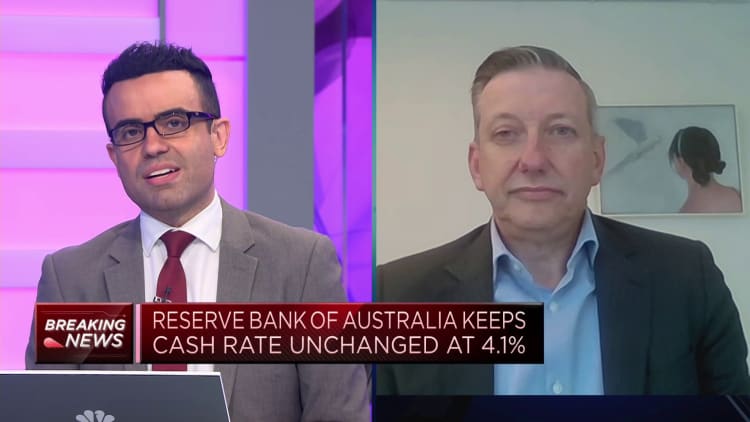
Central banks should pause now to allow monetary policy to take effect: CIO

This offered a contrasting signal to a Labor Department report earlier in the week in which job openings posted a surprising jump in August, rising to their highest level since the spring and reversing a recent trend of declines.

Markets, and Fed policymakers, will be closely watching Friday’s nonfarm payrolls report for further indications as to the health of the U.S. labor market.

Though jobs reports have been traditionally viewed as a lagging indicator, Richardson noted that the relationship between the labor market and monetary policy has been overhauled in the course of the current cycle.

“I think there is a feedback loop that is underappreciated. People say the labor market or a good jobs picture is lagging, but the jobs picture is actually feeding current Federal Reserve policy, so it’s not just going in just one direction, there’s a feedback loop in between and these effects can amplify,” she explained.

“A simple relationship no longer exists. We are in a complex period of the global economy, not just the U.S., and the actions taken by the Fed affect the labor market but vice versa. So we can’t just say ‘oh this is lagging, six to nine months of Fed policy is going to show up in the labor market’ — the labor market is driving Fed policy now.”

Read the full article here

Share. Facebook Twitter Pinterest LinkedIn Tumblr Email

Related Articles

RSS Feed Generator, Create RSS feeds from URL

News October 25, 2024

X CEO Linda Yaccarino addresses Musk’s ‘go f—- yourself’ comment to advertisers

News November 30, 2023

67-year-old who left the U.S. for Mexico: I’m happily retired—but I ‘really regret’ doing these 3 things in my 20s

News November 30, 2023

U.S. GDP grew at a 5.2% rate in the third quarter, even stronger than first indicated

News November 29, 2023

Americans are ‘doom spending’ — here’s why that’s a problem

News November 29, 2023

Jim Cramer’s top 10 things to watch in the stock market Tuesday

News November 28, 2023
Add A Comment

Leave A Reply Cancel Reply

Demo
Top News

How to Get Your Cut of Amazon’s New $1 Billion Returns Settlement

February 3, 20260 Views

Feeling Stuck in the Weeds? Here’s How to Break Free.

February 3, 20260 Views

I Was Burning Out. Then One Simple Question Gave Me a Solution

February 3, 20260 Views

Why European Companies Are Buying Up Premium U.S. Domains

February 3, 20260 Views
Don't Miss

Why the Wrong Investor Is More Dangerous Than Running Out of Cash

By News RoomFebruary 3, 2026

Entrepreneur Key Takeaways Taking money without alignment on values, trust, timing and working style often…

The “Bomb Cyclone” Recovery Guide: What Insurance Covers (and What It Doesn’t)

February 2, 2026

15 Soft Skills That Are Your Most Valuable Asset in the Workplace (and How to Show Them Off)

February 2, 2026

Why Entrepreneurs Are Choosing StackSkills Unlimited at $19.97

February 2, 2026
About Us

Your number 1 source for the latest finance, making money, saving money and budgeting. follow us now to get the news that matters to you.

We're accepting new partnerships right now.

Email Us: [email protected]

Our Picks

5 Signs You’re Saving Too Much for Retirement

February 3, 2026

How to Get Your Cut of Amazon’s New $1 Billion Returns Settlement

February 3, 2026

Feeling Stuck in the Weeds? Here’s How to Break Free.

February 3, 2026
Most Popular

Foundations Of Health And Longevity In Retirement

December 6, 20256 Views

Spend Less and Stay Productive with This MacBook Air for Less Than $250

November 30, 20254 Views

America Has a New Favorite Mattress Brand — but There’s a Hitch to Maximizing Your Satisfaction

December 6, 20253 Views
Facebook Twitter Instagram Pinterest Dribbble
  • Privacy Policy
  • Terms of use
  • Press Release
  • Advertise
  • Contact
© 2026 iSafeSpend. All Rights Reserved.

Type above and press Enter to search. Press Esc to cancel.