


• Home
  • News
  • Personal Finance
    • Savings
    • Banking
    • Mortgage
    • Retirement
    • Taxes
    • Wealth
  • Make Money
  • Budgeting
  • Burrow
  • Investing
  • Credit Cards
  • Loans

Subscribe to Updates

Get the latest finance news and updates directly to your inbox.

Top News

Are Stocks Done Going Down? Don’t Bet on It

April 2, 2026

From Resumes to Salary Negotiations, Here’s How Gen Z Workers Rely on Parents

April 2, 2026

The Blind Spot That Makes Companies Repeat Costly Mistakes

April 2, 2026
Facebook Twitter Instagram
Trending
  • Are Stocks Done Going Down? Don’t Bet on It
  • From Resumes to Salary Negotiations, Here’s How Gen Z Workers Rely on Parents
  • The Blind Spot That Makes Companies Repeat Costly Mistakes
  • Cornell Instructor Goes Old School to Combat AI Cheating
  • Elon Musk’s SpaceX IPO Could Rocket Him to Trillionaire Status
  • Don’t Let This ‘Tax Bomb’ Ruin Your Retirement: Expert Advice
  • Sam’s Club Raising Annual Membership Prices in May. See by How Much.
  • Why Your Manager Comes Off Cold — and Why That’s a Good Thing
Friday, April 3
Facebook Twitter Instagram
iSafeSpend
Subscribe For Alerts
  • Home
  • News
  • Personal Finance
    • Savings
    • Banking
    • Mortgage
    • Retirement
    • Taxes
    • Wealth
  • Make Money
  • Budgeting
  • Burrow
  • Investing
  • Credit Cards
  • Loans
iSafeSpend
Home » War and Bear Markets Go Hand in Hand. Here’s Why.
Investing

War and Bear Markets Go Hand in Hand. Here’s Why.

News RoomBy News RoomOctober 18, 20230 Views0
Facebook Twitter Pinterest LinkedIn WhatsApp Reddit Email Tumblr Telegram


Angela Weiss/AFP via Getty Images

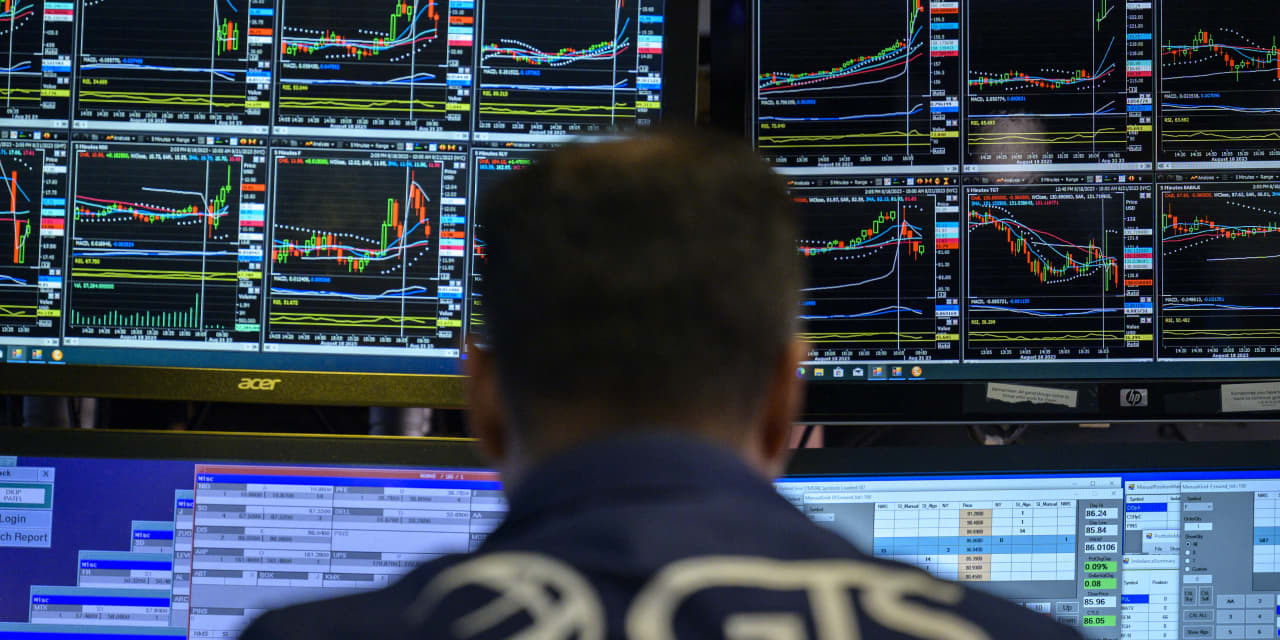
War—what is it good for? Usually not markets. So far, however, rising geopolitical tensions this year haven’t been enough to derail investors’ attention, although it creates one more speed bump on stocks’ road higher.

The recent surprise Hamas attack on Israel has rapidly escalated hostilities in a region already beset with violence, so it’s no surprise that nerves are rattled. It also came at a time when much of the world is still grappling with the impact of the Russian invasion of Ukraine, an ongoing conflict stemming from early 2021. In the U.S., funding to help both Ukraine and Israel remains divisive along party lines.

While war is invariably tragic, it can also be traumatic for markets. ICAP Chief Technical analyst Walter Zimmerman Jr. writes that much as the Nasdaq Composite peaked in 2021, the same year as Russia’s invasion, it did in 2001 as well, the year of the September 11 attacks and the U.S. invasion of Afghanistan. Similar patterns between market tops and geopolitical shocks are obvious every two decades, he adds, dating back throughout the history of the modern market.

That begs the question, which comes first, the bear market or the war? That’s the wrong way to frame the issue, however, Zimmerman argues, as he believes they arise together when societies feel they are devoid of other options.

“A bull market in equities is driven by hopes that the future will be better than today,” he writes. “A bear market in equities is driven by fears the future will be worse than today. Collective stress and tension excel at turning hopes into fears.”

There’s no shortage of fear in today’s world, of course, although for now many investors are still more concerned with the Federal Reserve than fighting.

Investors are of course worried about the conflict, but as Seven Report’s Founder and President Tom Essaye writes, their flight to safety last week after the initial attack led them to Treasuries, pushing the prices of those higher, which consequently had the opposite effect on their payouts. “An escalation in the military conflict between Israel and Hamas sent yields lower, and regardless of the reason, lower yields have been good for stocks recently.”

Indeed, high interest rates, which have pushed up bond yields, have been weighing on stocks lately. That’s because many investors are happy to put their money in virtually risk-free assets versus hoping for a slightly higher, but not guaranteed return from equities.

More broadly though, Essaye argues that the main reason that the market has proven relatively resilient amid the drums of war is that “investors have once again embraced the idea that the Fed is done with rate hikes.”

In the face of cooling inflation, ongoing evidence of a soft landing, and consistent commentary from Fed officials in recent months, many strategists feel confident in that prediction. Thus Essaye argues that it’s unlikely that the
S&P 500
will fall below 4,200—although it also will struggle to break above 4,450.

“Bottom line, this remains a ‘noisy’ market, and it’s being made even more so with the Iran/Hamas war,” he concludes. “But for all the noise in the macroeconomic environment, as long as the three pillars of the rally remain in place, the downside risk should be limited and the S&P 500 largely rangebound until we learn 1) If a soft/no landing is truly going to occur, 2) If inflation can decline to the Fed’s target or bounce back, and 3) If the Fed is truly done with rate hikes and when cuts might occur.”

For his part, Zimmerman is not particularly confident in the central bank in general, noting that the “Fed has been blindsided by every financial crisis the U.S. has faced since the Fed began in 1914.”

That may be so, but trying to fight the Fed is often its own kind of unwinnable war.

Write to Teresa Rivas at [email protected]

Read the full article here

Share. Facebook Twitter Pinterest LinkedIn Tumblr Email

Related Articles

Cornell Instructor Goes Old School to Combat AI Cheating

Investing April 2, 2026

How LinkedIn’s Puzzlemaster Is Shaping the Game

Investing April 1, 2026

Entrepreneurs Can Now Access 1,000+ Professional Courses for Just $19.97 for Life

Investing March 29, 2026

How to Level Up Your Sales Process in Under 10 Hours

Investing March 28, 2026

How Software Overload Is Costing You More Than You Know

Investing March 27, 2026

Meta and YouTube Found Liable in Landmark Addiction Case

Investing March 26, 2026
Add A Comment

Leave A Reply Cancel Reply

Demo
Top News

From Resumes to Salary Negotiations, Here’s How Gen Z Workers Rely on Parents

April 2, 20260 Views

The Blind Spot That Makes Companies Repeat Costly Mistakes

April 2, 20260 Views

Cornell Instructor Goes Old School to Combat AI Cheating

April 2, 20260 Views

Elon Musk’s SpaceX IPO Could Rocket Him to Trillionaire Status

April 2, 20260 Views
Don't Miss

Don’t Let This ‘Tax Bomb’ Ruin Your Retirement: Expert Advice

By News RoomApril 2, 2026

Key Takeaways The u0022retirement tax bombu0022 refers to the often unexpected tax burden that comes…

Sam’s Club Raising Annual Membership Prices in May. See by How Much.

April 1, 2026

Why Your Manager Comes Off Cold — and Why That’s a Good Thing

April 1, 2026

Dozens of Major Retailers Offer Free Coupons and Year‑Round Discounts

April 1, 2026
About Us

Your number 1 source for the latest finance, making money, saving money and budgeting. follow us now to get the news that matters to you.

We're accepting new partnerships right now.

Email Us: [email protected]

Our Picks

Are Stocks Done Going Down? Don’t Bet on It

April 2, 2026

From Resumes to Salary Negotiations, Here’s How Gen Z Workers Rely on Parents

April 2, 2026

The Blind Spot That Makes Companies Repeat Costly Mistakes

April 2, 2026
Most Popular

Trump’s New Businesses Are Making Billions. Are His Investors Making a Dime?

March 9, 20262 Views

Why a Job Loss Still Feels Like a Dirty Secret, According to Workers

March 9, 20262 Views

75% of Buyers Walk Away From Sellers Who Make This Mistake

January 16, 20262 Views
Facebook Twitter Instagram Pinterest Dribbble
  • Privacy Policy
  • Terms of use
  • Press Release
  • Advertise
  • Contact
© 2026 iSafeSpend. All Rights Reserved.

Type above and press Enter to search. Press Esc to cancel.