


Where a child grows up in the U.S. is becoming an increasingly critical component toward determining their future economic status.
Research from economists at Brown University, Harvard University and the U.S. Census Bureau shows that the numerous variables that define neighborhoods — such as the quality of their school districts, poverty rates and conditions that influence social capital in a community — all have lasting impacts on children’s future income. The research’s findings were presented earlier this year comparing mobility levels around the world at a World Bank conference.
While it may seem obvious that a good neighborhood may translate into better chances for success in adulthood, it also highlights that being immersed in these areas at a young age is important — and that sociological forces, while difficult to quantify, play an important role in economic prospects.
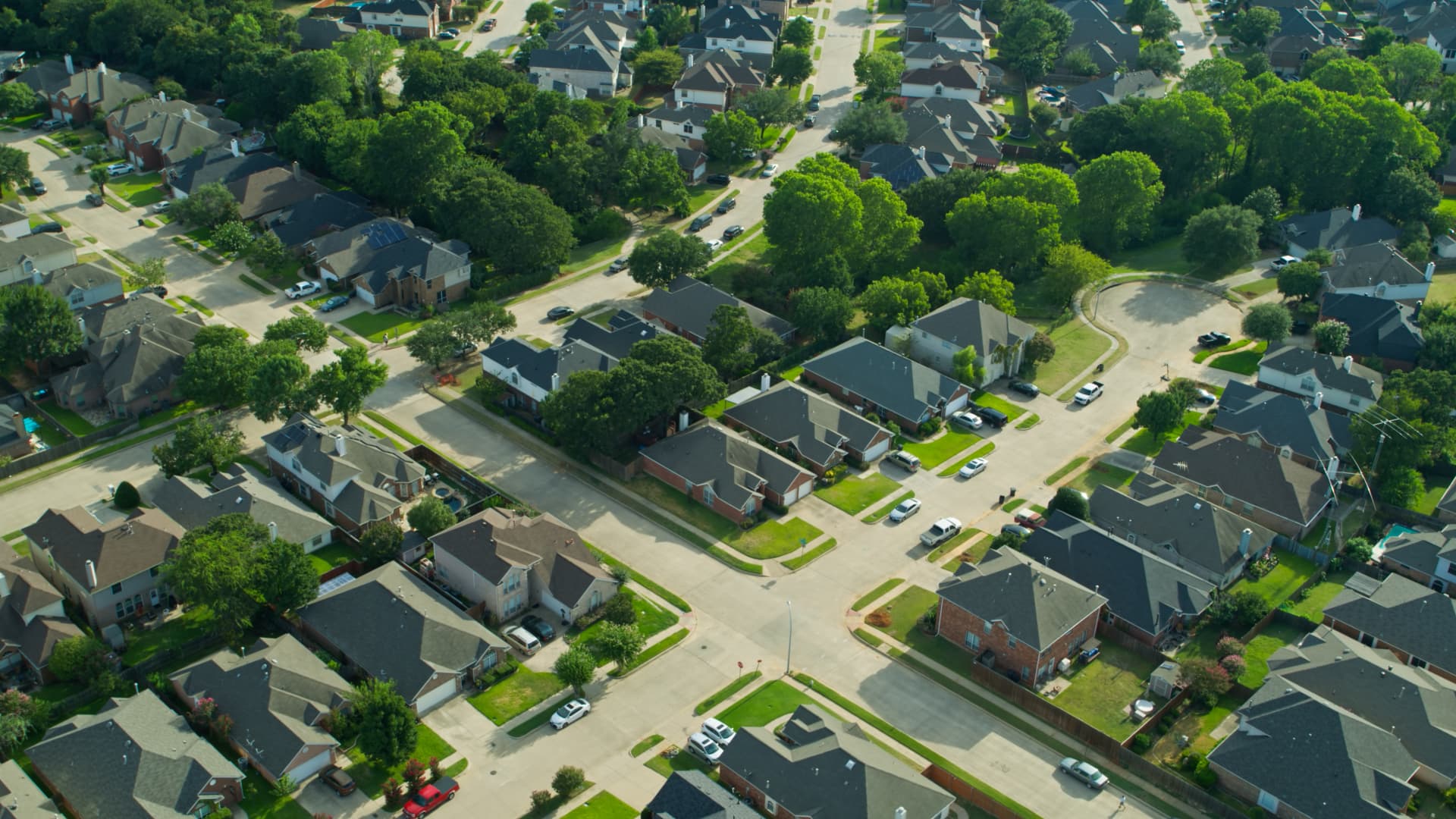
These insights could help to shift the tide against worsening rates of intergenerational mobility in the U.S. by informing policymakers as to which decisions could be the most influential in shaping upward prospects, according to John Friedman, professor of economics at Brown University and co-director of Opportunity Insights. Given the geographic span of the U.S., intergenerational mobility varies across a national scale. Yet even when focusing on just an intra-city level, mobility can differ widely between neighborhoods across the street from each other, Friedman said.
Friedman and his colleagues at Opportunity Insights research program created the Opportunity Atlas, which tracks children’s outcomes in adulthood using U.S. Census and tax data. The data shows adult a child an earn an average of $56,000 as an adult if they grow up in one neighborhood, versus just $33,000 if they grow up in an adjacent area.
We are thought to be the country of the American dream, [where] once you start from the bottom, you move to the top. But that’s just not really what we see.
Kreg Steven Brown
Director of economic mobility policy at the Washington Center for Equitable Growth
“It’s not just that exposure to these local places is incredibly important. It seems [that] exposure during childhood is the most important thing,” Friedman said.
While moving to a “better” neighborhood can shape their earnings as adults, the age at which a child moves is also critical in realizing these benefits, Friedman found. The older a child is at the time of the move, the lower their projected income at age 35. At age 24, no income gains can be measured from moving to a higher-mobility neighborhood.
Although it’s difficult to pinpoint all the various characteristics of high-mobility neighborhoods, these areas hold certain common characteristics. These include lower poverty rates, more stable family structure, greater social capital and better school quality.
“Policies tend to be more impactful in people’s trajectories when people are kids, but I don’t think there’s a sharp cut-off,” said Friedman.
Measures of mobility
There are two measures of mobility: relative and absolute. The former measures the chances of rising to the top of the country’s income distribution and has remained stable in the U.S. The latter gauges the chances that a child born into poverty rises to a higher standard of living.
“We have less [relative] mobility in this country than we do in other developed nations, especially in Europe and developing European countries. And so even though relative mobility haven’t gotten much better, or much worse over time, it is harder to move from the bottom to the top,” said Kreg Steven Brown, director of economic mobility policy at the Washington Center for Equitable Growth. “We are thought to be the country of the American dream, [where] once you start from the bottom, you move to the top. But that’s just not really what we see.”
In the U.S., there’s 13.1% average probability that a child of parents in the bottom half of the income distribution can make it to the top quartile, according to data from the World Bank. In Denmark, that probability rises to more than 20%. China, South Africa and Morocco also rank higher than the U.S.
Absolute mobility across generations has been in continuous decline in the U.S. since 1980, according to Opportunity Insights. Concurrently, economic inequality has risen over this period. While slowing economic growth compared to developing economies can be cited as a factor, the American economy is becoming relatively immobile compared to its developed-economy peers.
The “Great Gatsby Curve” demonstrates the correlation between income inequality and intergenerational earnings “stickiness.” Higher levels of income elasticity correlate to less upward mobility.
The curve shows that, compared to other developed nations such as Germany, Canada, Japan, France and Scandinavian countries, not only is wealth much more concentrated amongst a small group in the U.S. — there is also less upward mobility.
Possibilities from education
Inequality and mobility remain tricky subjects for economists to measure. Collecting data sets that span over a generation is difficult, and with so many social factors at force — racial segregation, gender, education, household structure, environment — identifying causation, correlation and confounding variables in a study continue to pose challenges.
“It’s really hard to know what works, because we don’t really have the time to wait a generation to see if [a] particular intervention designed in [a] way actually made the change you want to see,” said Brown.
However, education has been underscored as one of the greater openers toward greater mobility.
“One of the biggest equalizers, or mobility-enhancing policies, that you can do is to you provide good-quality education without a burden of debt,” said Juan Palomino, a research scholar at Universidad Complutense de Madrid.
Education also stands out because of all the pre-existing policy applications that can directly improve quality and resource allocation relative to other factors, Friedman added. “It’s a policy area that’s very impactful, and there’s also a lot of policy levers that one could pull that would increase, kids’ long-term outcomes.”
The U.S. only ranks behind England for having the world’s highest university tuition fees, according to data from the OECD. Tuition and fees have also more than doubled over the last 20 years and outstanding student loans total $1.75 trillion, as of the third quarter of 2021.
Friedman noted that while improvements could be made to the U.S. financial aid system. Data on aid awards from the Susan Thompson Buffett Foundation given to Nebraska high school graduates showed only about an 8% increase, from a base of 62%, in the fraction of people who went to a four-year college.
Notably, the Biden Administration’s student loan forgiveness plan was struck down by the Supreme Court in June, denying millions of borrowers the chance to have their debts reduced.
“College is much more expensive than it used to be, but it remains [about] the single best investment most people can make,” said Friedman.
Read the full article here