



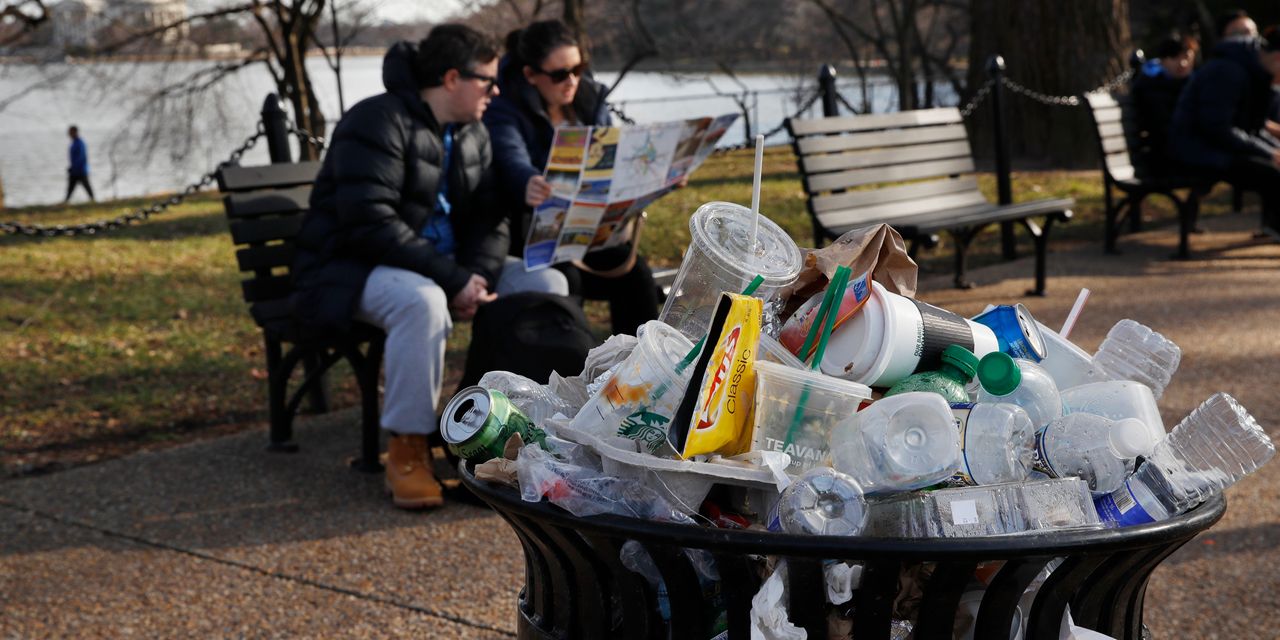
No one wants tons of waste polluting the environment. Yet over the past few years, some voices in the environmental movement have suggested that recycling, notably plastic recycling, is futile at best — or at worst a ruse that contributes to the ubiquity of plastic trash.
With U.S. recycling rates for plastics ranging from just 8.5% to 13.1%, depending on how and what you measure, consumers are being misled, the argument goes, and producers overstate recyclability claims as license to produce cheap packaging that should be replaced with less environmentally damaging alternatives.
But this is a flawed critique — akin to suggesting that a thirsty garden could be revived by trimming withered leaves instead of watering it.
Plastic waste is an existential crisis, and no credible voice can argue otherwise. For that reason, efforts to reduce and reuse plastics must be prioritized. But let’s pause for a reality check: According to the United Nations Environment Programme, humanity has already produced more than 9 billion tons of plastic, with 7 billion tons discarded into landfills.
Even if we could press a magic button to halt all future plastic production, we would still need to contend with the weight of plastic pollution that is already upon us. We cannot recycle our way out of this crisis. But there is no viable solution without recycling.
This much is true: The U.S. recycling system for all residential materials — not just plastics — is performing far below its potential. Seven out of 10 cardboard boxes, four out of five steel cans, three-quarters of mixed paper, and seven out of 10 glass and PET bottles end up in landfills.
Recycling in the U.S. is a complex, interdependent, multi-material system that comprises 9,000 local governments, countless consumer goods companies and a multitude of private-sector collectors and processors of recyclables. Plastic waste may capture the headlines, but it isn’t the only weak link. The entire system requires urgent investment, not vilification, if we are to have any hope of reducing waste and keeping valuable materials out of landfills.
Fortunately, when it comes to recycling, past performance doesn’t have to be an indication of future results. A $3.4 billion investment each year over five years could completely transform U.S. residential recycling, maximizing its potential and making it as accessible to all American households as trash service. Such an investment would reduce waste from all materials, including plastics; double the U.S. curbside recycling rate and deliver an economic benefit of $30.8 billion over 10 years including wages, taxes, landfill savings, and the value of recyclables that can be unlocked with a more effective system.
“Corporate support for recycling is essential. ”
What steps can we take to improve recycling in an economically viable way? Three solutions could make an especially significant impact: implement extended producer responsibility policies; enhance industry support for recycling, and advance standards for packaging recyclability.
1. Extended producer responsibility policies: In the U.S., local taxpayers bear the cost of funding recycling programs. But well-designed extended producer responsibility (EPR) policies would shift some of that burden to packaging producers, requiring them to pay fees to fund recycling improvements. EPR fees can also serve as an incentive for companies to make packaging more recyclable.
Based on a recent study of seven global jurisdictions with EPR programs, we found that enacting EPR in the U.S. could increase recycling rates by as much as 48 percentage points. For most U.S. states, recycling rates under EPR could be as high as 75%.
With close to 34 million Americans lacking access to recycling on par with trash services, the impact could be game changing. In the absence of federal EPR policy, a few states — California, Colorado, Maine, and Oregon — have begun enacting EPR legislation. Considering these gains, every company and organization should support well-designed EPR policies.
2. Industry recycling support: The four state EPR laws recently passed will yield their first new tons of recyclables in 2026 at the earliest. Implementing and propagating successful policy takes time. That’s why proactive corporate support for recycling is essential. When companies commit to recycled content goals and comply with statutory content laws, when they spend on end-use infrastructure reliant on recycled material or earn the right to put “recyclable” on their packaging, they reduce business risk, build brand loyalty and create a positive reputation. They also gain credibility for their sustainability and ESG pledges. Proactive support for recycling is a commitment, and investment, that is not beholden to the often-slow-moving policy process and can create immediate impact.
3. Package recyclability standards: There is no industry alignment around a single, transparent source of truth on packaging compatibility with the recycling system. This needs to change.
We are working to advance a framework that brings clarity, called the Pathway to Circularity for Residential Recycling. It comprises five building blocks to determine package recyclability and is based on common-sense questions: Does the packaging follow industry design guidance for circularity? Is 75% of the market volume for the package category in a recyclable format? Do at least 60% of U.S. consumers have the ability to recycle the package? Can the packaging be sorted by facilities for end-market use? Does the material have a viable path to becoming something else? And finally, does the packaging conform to common specifications?
Conceived as a living framework that can evolve over time, the Pathway to Circularity can be used not only to determine residential recyclability but also to discover and drive practical improvements.
Americans make waste at a rate of 4.9 pounds per person each day. We can only address this problem with a combination of solutions, including reducing, reusing and recycling. With eight in 10 Americans believing in the positive impact of recycling, the U.S. can ensure that the system delivers the climate, economic and waste management dividends it is capable of. With the right attention and investment, far more effective recycling of all materials, including plastics, is within reach.
Keefe Harrison is the founder and CEO of The Recycling Partnership.
More: Financial markets worldwide now face a higher chance of extreme events, El-Erian warns
Also read: That Halloween pumpkin was probably affected by extreme weather
Read the full article here