



The first Limited Liability Company Act was passed in Wyoming in 1977. If you think that LLCs become popular after that, you’d be wrong. In fact, LLCs were pretty much ignored as a form of business entity through the remainder of the 1970s, through all of the 1980s, and for most of the 1990s. The reason that folks avoided LLC is that it was uncertainty as to how they might be taxed due to the IRS’s inability — refusal was more like it — to issue guidance on the subject. So, basically for 20 years, the LLC languished in a status where they were legally allowed but nobody used them.
This sad state of affairs finally changed in 1996 when the IRS passed the so-called “Check The Box” regulations that allowed an LLC to be taxed as either a corporation or a partnership, to begin the following year. After that, the LLC exploded as the entity-of-choice for new business formations, at least for businesses that were not intended to have their stock sold on the exchanges and certain types of businesses that required particular licenses (the states were, as usual, slow to allow licenses to be issued to a new entity form). We now live in an LLC world where LLCs are found everywhere and in just about every situation involving a significant asset or an operating business. There are a lot of reasons for this, probably ease of management, but at any rate LLCs are all around us.
But nothing is perfect, and there is a fly in the LLC ointment.
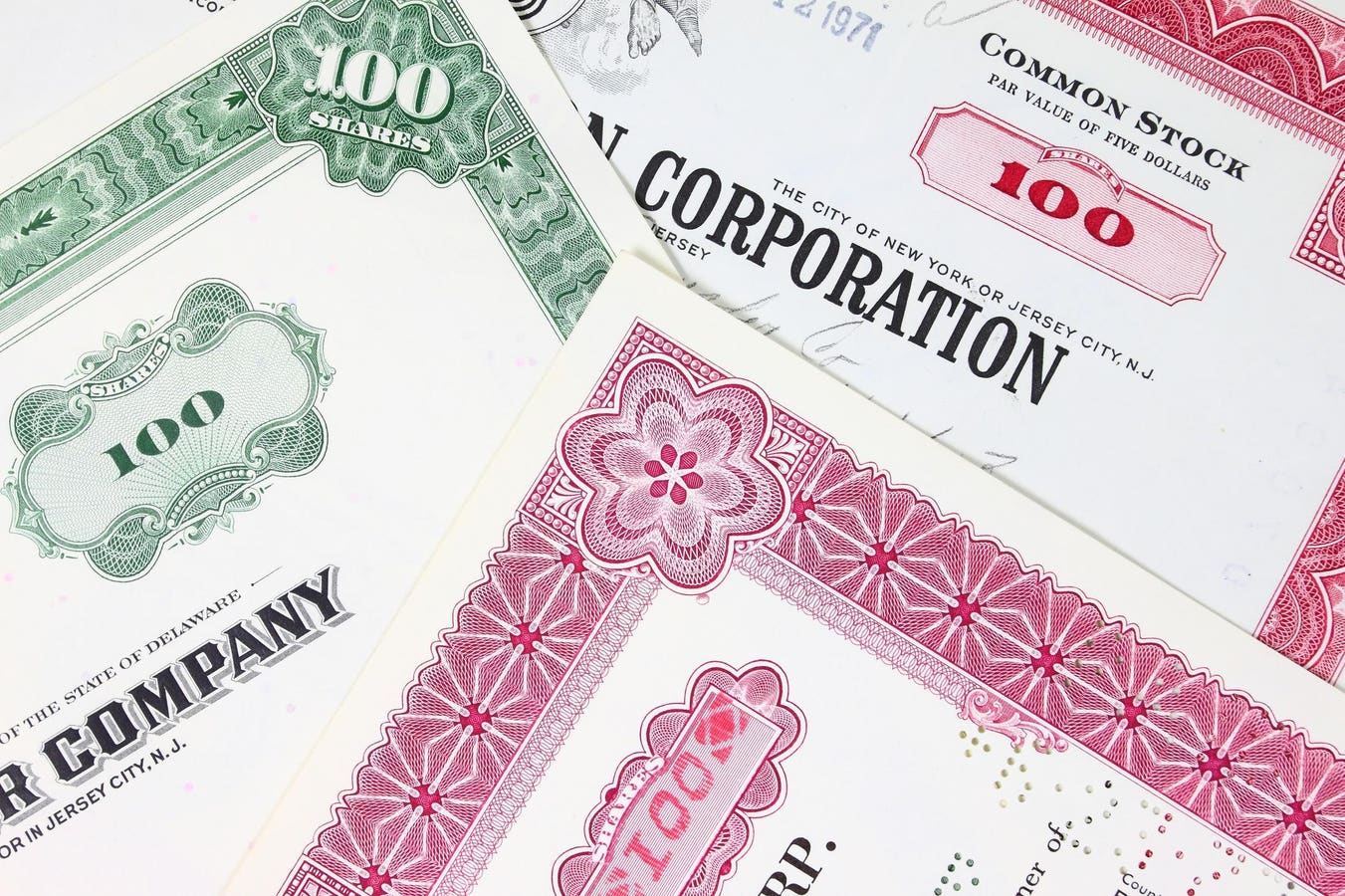
To understand this problem, we have to consider what the entity world was like prior to LLC. Prior to 1996, the vast majority of business entities were corporations. Yes, there were a few partnerships and limited partnerships around, but by and large the entity-of-choice was the corporation. A corporation is distinguishable by one feature: Stock shares representing the equity in the corporation. All of the rights of the holder of a share of stock was self-contained in the share, including rights to dividends and voting rights. Whoever held the share of stock held all the rights, at least as it involved the most common type of shares known as common shares. This is to be distinguished from preferred shares which paid a greater dividend, but had no voting rights, but which were usually limited to the stock issues of publicly-traded corporations. The bottom line is that if a person held an interest in a company that was not-publicly traded, they probably held common shares and whoever held those shares held all the dividend and voting rights.
Drilling down further to what is important here, we must now focus on shares as collateral. Thus, if a person who held common shares in a corporation wanted to obtain a loan and use the shares as collateral, that was relatively easy. The shares could be appraised and their liquidation value determined for purposes of the loan. The physical share certificates (yes, they really exist) could be stamped to indicated that they were subjected to a lien. If the holder defaulted on the loan, the shares could be seized by the sheriff and liquated by means of a judicial auction. The purchaser of the shares at the auction would then hold the exact same rights in the shares, both dividend rights and voting rights, as the borrower had held. In other words, share certificates could be “good collateral” assuming they had value that could be realized at the auction.
The same is not true of an LLC (or a partnership, but we’ll stick to LLCs here for convenience). With an LLC, something very different happens and because of that difference a borrower’s LLC interests can often be collateral of dubious value. It is the same difference that makes LLC interests generally unattractive to creditors and which results in the so-called charging order protection that I have so frequently written about. But this doesn’t involve charging orders directly, which is the subject of section 503 of the Uniform Limited Liability Company Act (ULLCA). Instead, it involves the preceding section 502 and something known as an transferable interest.
If the phrase sounds intimidating, it is not complicated at all. A transferable interest simply denotes two things: First, a member’s right to receive distributions from the LLC; and, second, the LLC’s operating agreement contractually allows the member to assign his right to receive distributions to somebody else. Which is to say that if the LLC’s operating agreement prohibited its members from assigning their interests at all, then an LLC member would not have any transferable interest at all which could be assigned, i.e., sold or pledged as collateral.
This is the first hurdle for taking an LLC interest as collateral. The lender must inspect the LLC’s operating agreement to ensure that it does not have an anti-assignment clause. If so, the LLC interest can never be any collateral, much less good collateral. But we will presume that such is the case and move on.
Now we come to section ULLCA § 502(g). This says that if an LLC member transfers its transferable interest — which is only their right to receive distributions — the LLC member retains all other rights in the LLC, which includes voting rights. This puts the transferee into a potentially bad situation, where the transferee cannot vote to make a distribution in the first place, so the transferee is basically at the whim of all the LLC members, including the transferor member. But not only does a transferee have no voting rights, but under § 503(a)(3)(B) they also have no information rights, meaning that they can’t even find out what is going on with the LLC’s business. If one were to say that the only rights that a transferee has is to receive a random check in the mail, that would be pretty to true.
The upshot is that if an LLC interest is taken as collateral and the borrow defaults which results in a judicial auction of the interest, whoever buys the interest at the auction becomes a transferee and has only the very limited right to receive distributions that would otherwise have gone to the borrower. Thus, for a buyer at that auction, the LLC interest may need to be substantially de-valued at least compared to common stock. This is the second hurdle.
Or maybe not, depending upon the situation.
Hedge funds are often organized as LLCs. Let’s assume that an investor owns a 1.78% interest in one of these funds, which pays regular distributions to all its members. The investor wants to use that interest as collateral. How good is that interest as collateral? Probably pretty good, since the hedge fund will probably just keep making distributions to that interest without regard to who is ultimately receiving the distributions.
Contrast that with a situation where the investor is one of four members in a small operating business organized as an LLC. The investor uses the interest as collateral, and then defaults. The lender’s lien on the interest is foreclosed, and somebody purchases the interest at the ensuing judicial sale. At this point, the other members may desire to themselves purchase the interest, albeit at a deep discount from what it sold for at the judicial auction, and so they simply quit making any distributions. Now the purchaser from the auction isn’t getting any return on the interest, and probably will be happy to take whatever pennies on the dollar that are offered just to get rid of it. In that scenario, the LLC interest is very bad collateral.
The third and final hurdle for a lender who takes an LLC interest as collateral is to get a good lien down on the interest. This is a much lengthier discussion, but suffice it to say that perfecting liens on LLC interests can be tricky, and if a borrower goes into default with one lender, then there is a good chance that they have gone into default with other lenders also, and some of those other lenders may obtain a charging order lien against the interest against which the consensual lien will compete for priority. There are some business planning attorneys who take the position that to get the best lien position for a borrower’s LLC interest, the interest should be certificated, i.e., reduced to a physical certificate much like a stock certificate, the lien should be denoted on the certificate, and the lender or an escrow agent or trustee should hold the physical certificate until the loan has been paid.
Another way to perfect a lien on an LLC interest is to get the LLC itself to sign off on the lien and consent to honor it until the loan is discharged. This sounds easy enough, but the LLC really has little incentive to do this, and also sometimes the borrower doesn’t want the LLC to know that the borrower’s interest is being used as collateral (this by itself should raise a red flag). But there is a big advantage to lenders in requiring this, which is that the lender can also determine that the borrower’s LLC interest has not previously been pledged to another lender as collateral as happened frequently in the several years leading up to the 2008 crash.
The bottom line is that a lender must be very careful when accepting a borrower’s LLC interest as collateral. The lender must carefully review the LLC operating agreement, understand the nature of the LLC and predict whether distributions will continue and in what amounts, and also take additional steps to perfect a lien on the LLC interest.
Otherwise, the lender may discover later that it is holding little more than an empty bag.
Read the full article here