

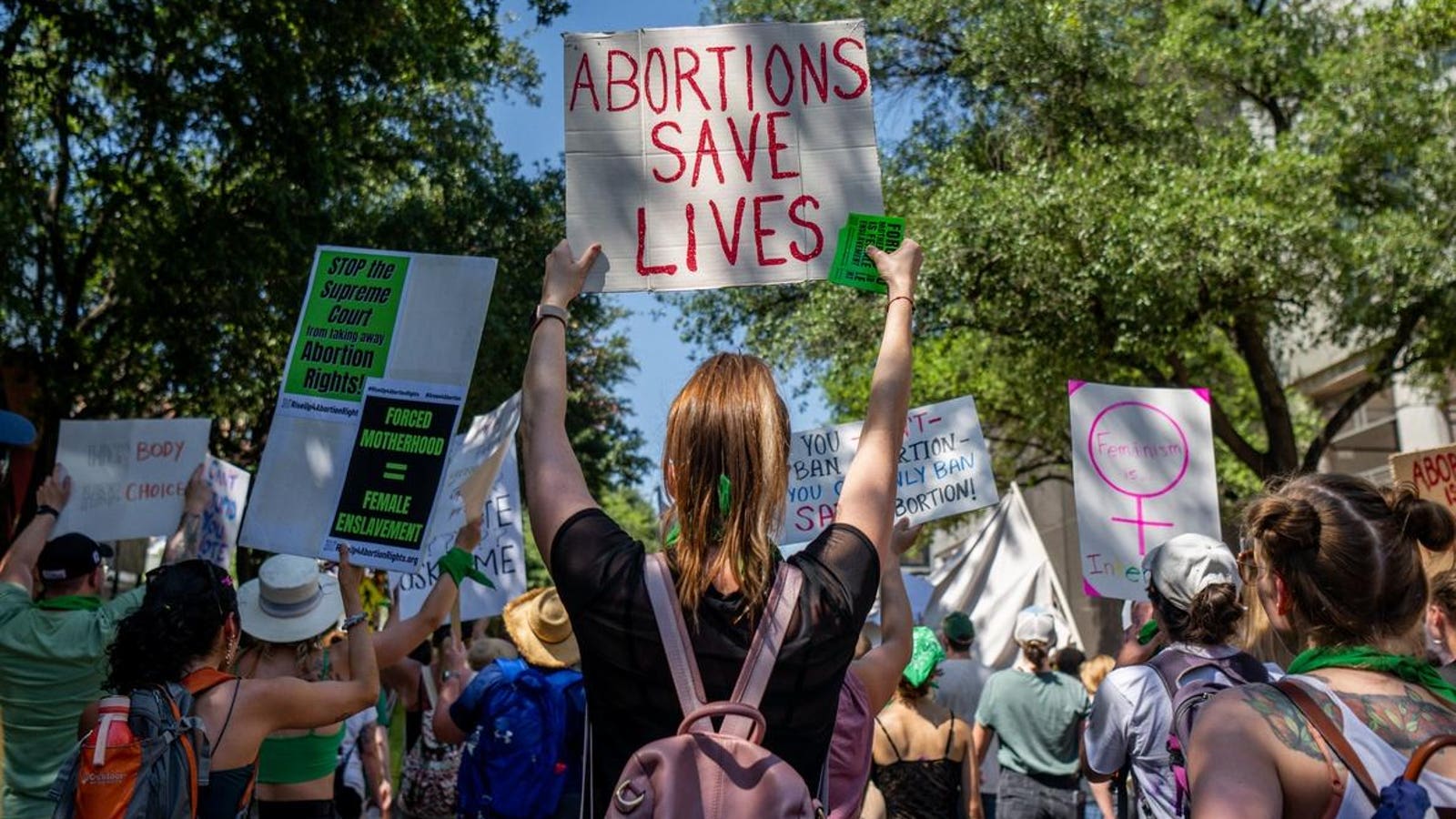
In the famous 2022 Supreme Court Case of Dobbs v. Jackson Women’s Health Organization that overturned the national law that an abortion was a private matter between a woman and doctor, the petitioners insisted that there is “no causal link between the availability of abortion and the capacity of women to act in society.” In other words, no relationship between abortion access and women’s economic and social participation.
Not true.
I joined the amicus brief filed by over 124 economists in Dobbs v. Jackson Women’s Health Organization. We argued that the Supreme Court should maintain abortion rights because research shows that abortion access has significant economic effects on women—a well-documented case that the Attorney General of Mississippi dismissed.
We cited research that a woman’s ability to control her fertility is a prerequisite to economic independence, emergence, and emancipation. Access to family planning healthcare raises women’s education levels and labor force participation, and reduces poverty risk.
And Melissa Holly Mahoney at the Institute for Women’s Policy research just published a major study on the economics consequences of restricting access to family planning resources. IWPR showed that as of 2023, nearly half of the 49.5 million prime working-age women (ages 25–54) in the US resided in states with total abortion bans or severe restrictions, with approximately 17.6 million (36 percent) living in states with complete bans. Employers in these states may face more absenteeism, difficulty in recruiting and higher turnover.
In a natural experiment called the Turnaway study, researchers compared two groups of women seeking an abortion, looking at 30 different clinics across the U.S. over five years. They reported their major findings in a 2023 American Economic Review article aptly named, “The economic consequences of being denied an abortion.”
In the study, some women got the abortion they sought and others were turned away because they were a few days under the gestational limit. The difference in abortion access had major economic consequences on the women involved.
Six Economic Outcomes From Restricting Birth Control And Abortion
1. Women who were denied abortions experienced immediate and sustained financial hardships. Many women who seek abortions are already struggling financially—75% are low-income, and nearly half live below the poverty line.
Having an unwanted baby causes health problems and lost work that raises women’s risk of falling even deeper into poverty, including increased debt and the risk of eviction.
Abortion denials result in greater parental obligations for women, without any guarantee of increased support from the government, family members, or male partners. Financial distress is the first effect of an unwanted pregnancy that results in birth.
2. Abortion and birth control have enabled women to pursue education and career goals and compete in the labor market with men. Access to abortion has reduced teen motherhood by 34% and increased college attendance among women.
3. Birth control and abortion access enable women to keep job commitments. Limiting women’s choice shrinks labor supply. Curbing abortion also access reduces access to facilities that provide family planning advice. Nobel prize-winning economist Claudia Golden and her co-author Larry Katz found that the availability of the pill helped transform women’s life choices by providing them with greater control over their reproductive lives—allowing women to invest more in their education and careers, leading to increased labor market participation and higher educational attainment.
4. Women experience large and persistent declines in earnings after childbirth (known as the “mother penalty”), while repeated studies have found no “father” penalty.
5. Restricting abortion access disproportionately affects Black and Hispanic women, who already face economic insecurity. Abortion restrictions worsen racial disparities in income and wealth.
6. Most pregnant people wanting an abortion are already parents. The most common reason for having an abortion is to take better care of their existing children and to maintain basic financial security. Thus, abortion access benefits children. Children born to women who could plan their pregnancies generally have better health, education, and financial outcomes. Restricting abortion has long-term negative intergenerational effects.
In their claims that restricting abortion would have no economic impact, the plaintiffs in Dobbs ignored substantial empirical evidence documented in both Roe v. Wade and Planned Parenthood v. Case. In those cases, the court accepted research-based arguments that abortion had significant positive economic effects on women’s economic lives.
Abortion And The 2024 Presidential Election
Vice President Kamala Harris and Donald Trump hold starkly different views on abortion rights and access. Harris supports abortion rights and advocates for codifying Roe v. Wade, ensuring women’s access to safe, legal abortion services nationwide. Trump opposes abortion rights and access, and has promoted restrictive measures, including appointing conservative judges, aiming to overturn Roe. Under Trump’s administration, the Supreme Court gained a majority that enabled the Dobbs decision, allowing states to impose strict abortion laws, curtailing federal abortion protections.
The 2024 presidential election carries significant economic implications, from taxes and tariffs to policies on abortion rights. And abortion rights are misunderstood as merely cultural.
The IWPR found 8 of the poorest 10 states (those with the lowest gross domestic product (GDP) per capita in 2023) The eight struggling states with severe abortion bans are Alabama, Arkansas, Idaho, Kentucky, Mississippi, Oklahoma, South Carolina, and West Virginia.
In contrast, 14 of the richest 17 states have protection for reproductive rights. the 14 states are Alaska, California, Colorado, Connecticut, Delaware, the District of Columbia, Illinois, Maryland, Massachusetts, Minnesota, New Jersey, New York, Virginia, and Washington.
The IWPR poor economic performance of the states that restrict abortion is partly due to the suppression of women’s economic activity and engagement with economic life. Among the 18 states that ban or severely restricts abortion (and robust family planning care) most 10 experienced a sharper decline in female employment growth between 2022 and 2023 compared to the national average.
The states with total abortion bans were among the worst places to work. These states have median weekly earnings below the US median for prime-age (25–54) full-time workers, a trend consistent over the past three years.
Abortion and family planning rights are national economic issues.
Read the full article here