


Social Security Insolvency Looms Large
Thanks to some very important people whom you may not have heard of, federal policymakers and the general public can agree on the core financial dynamics of our looming Social Security cliff. According to the 2024 Trustees Report, Social Security’s total income in 2023 was $1,351 billion, while its expenditures reached $1,392 billion. This produced a shortfall, forcing the program to rely on its trust fund reserves, which projections indicate will be depleted by 2033 — and then only about 79% of scheduled benefits will be payable. The consensus on these facts is clear and hard-won.
Most experts agree that without intervention from Congress and the president, Social Security will be unable to meet its full obligations within the next eight years. This looming insolvency will make Social Security one of the most hotly debated topics in Washington, D.C. and across America. Without trust in the Trustees Report and the official numbers, it would be almost impossible to solve the problem.
Trust in these numbers comes from trust in the non-partisan and professional civil service employees who faithfully work as political power flip-flops between the Democrats and Republicans.
Stephen Goss: The Man Behind Social Security’s Trusted Numbers
Social Security is the most popular government program, consistently enjoying bipartisan support. A 2024 poll by the National Institute on Retirement Security found that more than 86% of Americans across party lines oppose cuts to Social Security benefits. Organizations like Social Security Works, which fiercely advocate for the program’s preservation, further highlight its popularity.
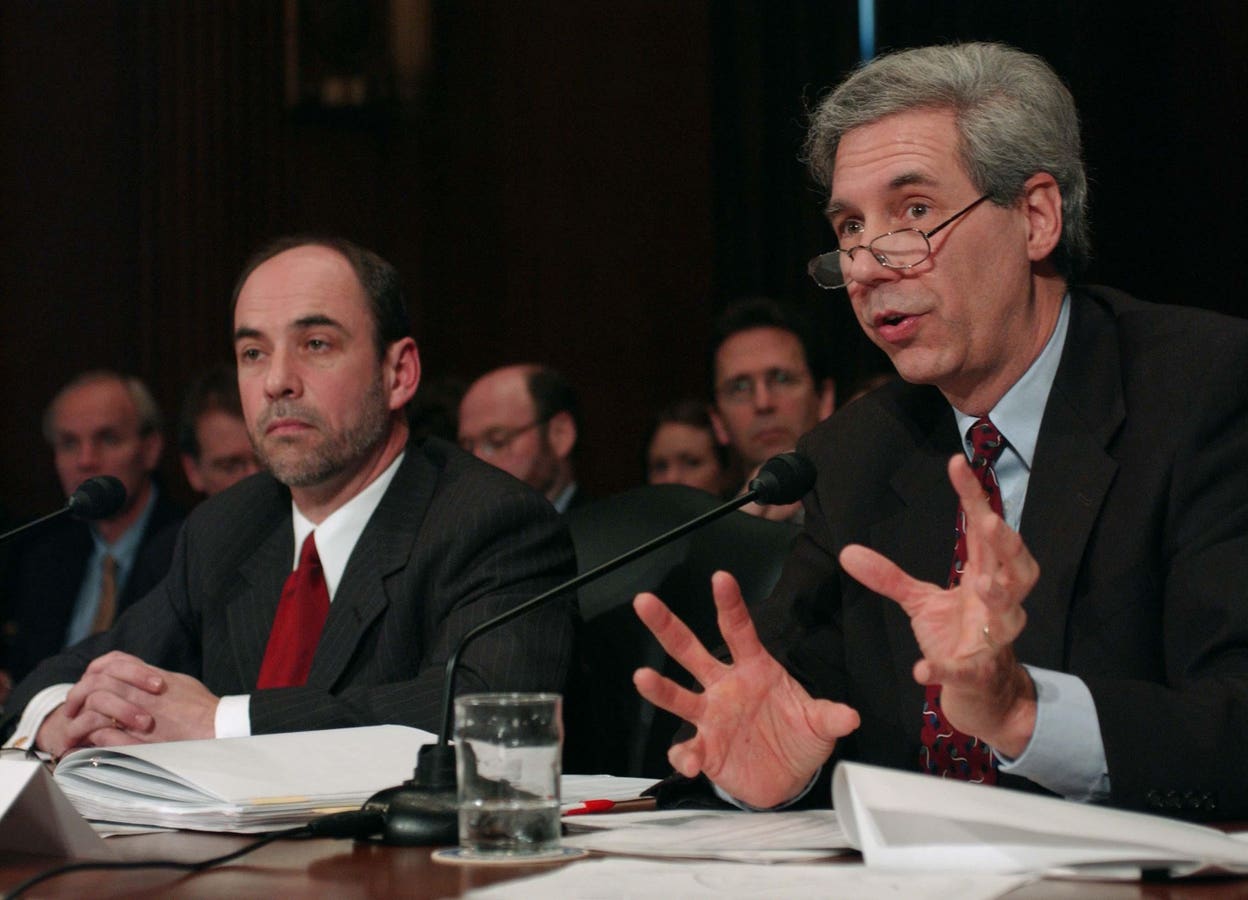
The math of Social Security is not disputed. Policymakers rely on projections — on productivity, immigration, fertility, etc. — to establish a financial reform path. Policymakers’ and experts’ trust in the Social Security projections is most often embodied in one person — Stephen Goss, who has served as the SSA’s Chief Actuary since 2001 and has been with the agency since 1973. Over his long career, Goss has testified before Congress more than 100 times, offering impartial analyses that have earned respect across the political ideologies.
Representative John Larson (D-CT), a staunch advocate for Social Security, calls on Goss frequently. Senator Bill Cassidy (R-LA), a key voice in bipartisan efforts to reform Social Security, has worked with Goss for years.
Goss’s credibility stems from his meticulous methodology and his office’s dedication to accuracy. His work ensures that debates over Social Security’s future are based on reliable data rather than partisan spin. Goss retired at the end of 2024, and his contributions to public service deserve recognition.
The Political Role Of Government Statistics — Including Social Security Data
Numbers don’t come from nature and fall out of the sky like rain. The politics and machinery of government figures are vital to a modern democratic market economy. Praising Goss and recognizing the importance of his work highlights a much bigger issue: the critical role that government statistics play in policymaking and public trust.
As Harvard’s Steven Kelman observed in his 1985 article — “Why Should Government Gather Statistics, Anyway?” — government data collection serves multiple purposes, from informing policy to fostering transparency. Kelman argues that accurate and impartial statistics are essential for effective governance, particularly in democratic societies where public trust is paramount. Even in the 19th century when almost every political faction wanted a small federal government, almost everyone wanted reliable government statistics on the number of people, cows, museum artifacts, and housing quality. The trust in our weights and measures and our official statistics is so widespread that we barely notice when we agree on the shape and size of our world.
Fish Don’t See Water — And We Don’t See Trusted Policies Creating Trusted Numbers
That we trust the numbers has much to do with the civil service (but the future of the civil service system is another issue.) Eminent Princeton sociologist Paul Starr’s 1992 analysis, “Social Categories and Claims in the Liberal State,” explores the rich politics embedded in the gathering of official government numbers. Starr notes that societies develop measures aligned with their expectations of government.
In complex economies like ours, where specialized labor and market forces often leave individuals vulnerable, programs like Social Security are vital to support families during periods of non-employment due to age, disability, or other factors. In this context, the integrity of government data becomes even more critical. It underpins programs like Social Security that define and address societal needs.
Goss’s tenure exemplifies this principle, demonstrating how trustworthy statistics can facilitate informed debates and effective solutions.
Stephen Goss, Chief Actuary for Social Security, Retires After 51 Years
Stephen Goss’s retirement on January 3, 2025, concludes an extraordinary 51-year career with the federal government. Starting at the SSA in 1973, Goss rose to become chief actuary in 2001. Over the decades, Goss played a pivotal role in maintaining public confidence in Social Security’s financial projections. His work has been instrumental in helping policymakers navigate one of the most complex and politically charged issues in modern governance – what to do with Social Security and how to protect workers’ families in rapidly changing demand markets. Goss’s legacy underscores a critical truth: We can’t manage what we can’t measure, and we can’t measure if we don’t trust the measures.
Goss’s ability to provide unbiased and precise data have made Social Security solvency discussions—a deeply contentious issue—far more productive than they might otherwise be. As political factions grapple with potential cuts and revenue raising they will depend on the Office of the Actuary’s easily available catalog of serious solutions. The credit for this database belongs to Goss’s steadfastness. His career stands as a testament to the value of dedicated public service and the importance of maintaining integrity in public service. Social Security’s challenges are daunting, but the foundation laid by Goss offers a path forward.
Goss’s long tenure as Social Security’s Chief Actuary has ensured that debates over the program’s future remain grounded in fact. As the nation honors his decades of service, it’s worth reflecting on the broader lesson of his career: the indispensable role of trust and accuracy in public institutions. While the future of Social Security remains uncertain, one thing is clear: Goss’s contributions will endure as a model of excellence in public administration. His legacy is a reminder that even in an era of division, dedicated individuals in public employment can guide policymakers toward solutions.
Read the full article here