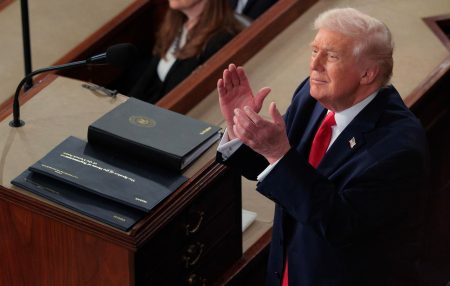



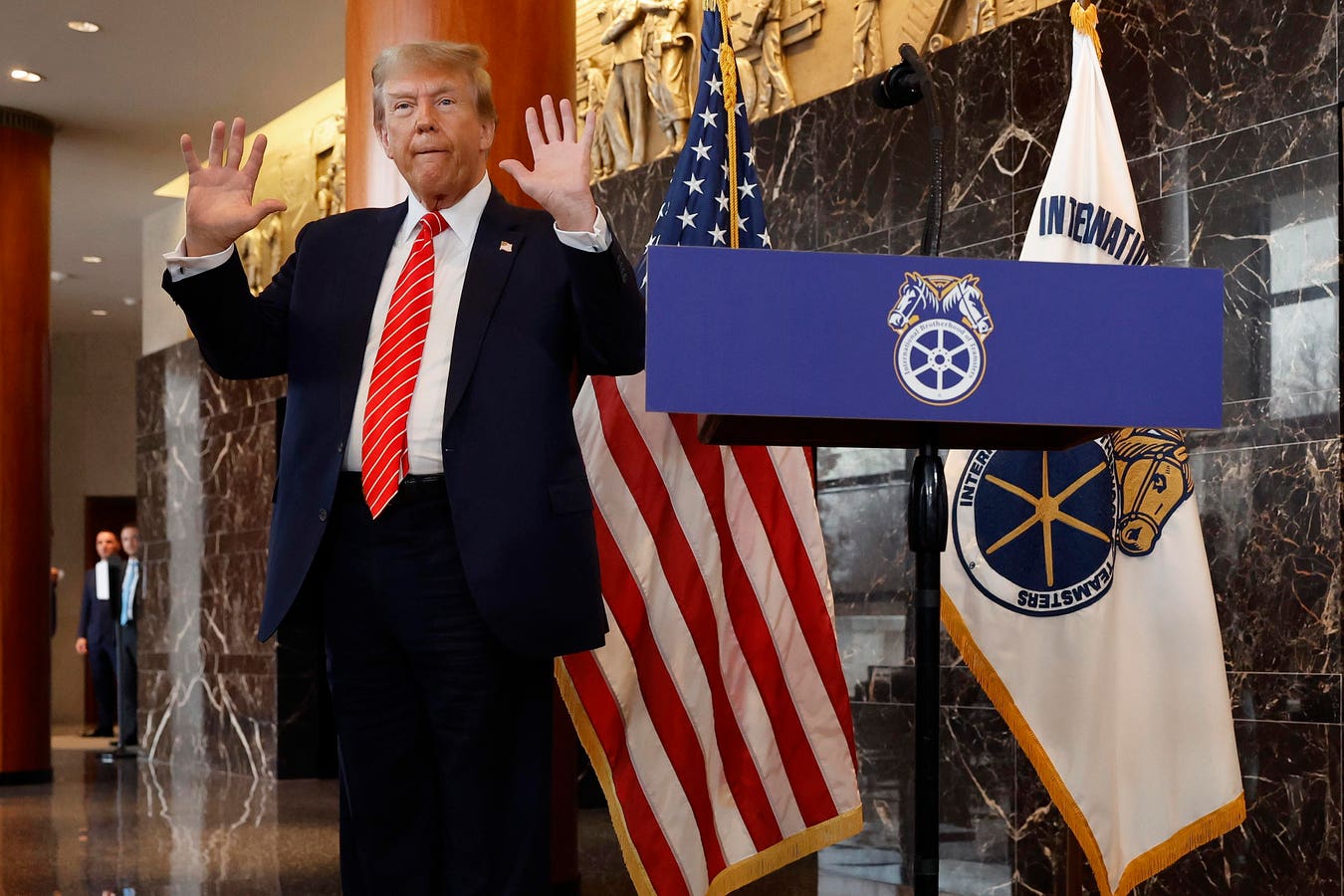
Late Monday night on January 27, President Trump neutralized the National Labor Relations Board, which is an independent federal agency designed to function without direct political interference. The law explicitly states the President of the United States cannot fire a sitting Board Member without cause, due process, and a hearing. She did not get a hearing.
But the salient impact is that without Member Wilcox, the Board won’t have a quorum and can’t issue decisions to settle disputes of unfair labor practices and other actions that promote the collective bargaining process and labor rights and union functioning.
Trump rendered the NLRB ineffective on the day before the Department of Labor issued its 2024 report that union membership is declining — from 10% of the workforce to 9.9% in 2024.
Union Density Is Falling
The decline in union density—even without the effective halt of federal enforcement of union and employer obligations—indicate less union power in the United States. Employers are gaining ground. Yet, public attitudes towards unions have become more significantly more positive, perhaps indicating a growing suspicion of corporations, and sympathy for the working class. And, not surprisingly support for unions is especially high among workers who reported problems at work -–underpayment, scheduling instability and harassment-–and workers with bad jobs.
Unions rates are the highest in education, where 32.3% of workers there are union members; union density is relatively high in extraction and construction (15.4%). But one of the largest and fastest growing industries, healthcare and social assistance, had only moderate unionization rate of (6.8%).
In 2024, the rates of unionization only increased in the food and preparation sector from a tiny 3.6% in 2023 to 4.5% in 2024. These workers have some of the lowest paid jobs in the nation. Though the fall in unionization rates was larger among workers 16-34 and positive for those over 65 (pattern that merely mimics employment changes by age), there may be underlying shifts in intergenerational attitudes about unions.
The nation is big and varied, so it is hard to know where unionization where unionization may break out and what issues unions might use to organized workers. That is why a deep dive in in localities matters so much in understanding attitudes toward unions.
Valuable Report From U. C. Santa Cruz
New evidence suggests younger workers are more attuned to the benefits of unionization.
Fortunately, researchers at the University Santa Cruz did such a deep dive in their January 2025 “Union-Curious Young Workers in Santa Cruz County” —-the first in a planned series of reports—-which reported 44% of young workers in Santa Cruz County would join a union if given the opportunity, 37% are union-curious, and only 19% would not join a union.
Nonunion workers in the high union density sectors were the most interested in joining a union or learning more about them. As expected, the education sector in Santa Cruz County leads, with 48% of young workers expressing a desire to unionize, while 17% said they would not join a union. Transportation follows closely at 47%, with 17% saying they would not join a union.
In the tourism industry, 51% of young workers are uncertain about union membership, 36% would join a union, and 14% of nonunion young workers in tourism said they would not join a union.
The researchers interpreted their results as a signal that the environment in Santa Cruz County—one with great divides in wealth and income, with a disproportionate share of university employees and agricultural employees compared to the rest of the nation—may be one of those places where unionization breaks out.
Why are people union-curious? They may know union workers have higher incomes than similar nonunion workers, but they don’t know if unionizing is risky or what other benefits unions provide—like more job security and more pension and health care plans—that lead to more wealth.
The Center for American Progress found that middle-class union households hold nearly four times as much median wealth ($201,240) as their nonunion counterparts ($52,221).
Unions also reduce financial instability by negotiating severance pay, supplemental unemployment benefits, and protections against predatory financial practices. These provisions help workers manage economic shocks without depleting their savings.
Don’t Ignore Vast National Support For Unions — Especially Among The Young
The UC Santa Cruz survey is similar to a 2024 Economic Policy Institute (EPI) study of union attitudes across the nation. EPI found since 1977, American workers’ attitudes toward unionization have turned positive. In 1977, approximately 27% of nonunion, nonmanagerial workers indicated they would vote for union representation. By 2023, this figure had risen to 43%.
Moreover, the share of workers expressing outright opposition to unions has declined. In 1977, a whopping 64% of nonunion, nonmanagerial workers said they would vote against unionization. By 2023, this figure had decreased substantially to 19%.
Notably, there has also been a significant increase in the number of workers who respond “don’t know” when asked. The share of “don’t know” responses rose from just 8% in 1977 to 28% in 2023. This ambivalence towards unions interested the EPI authors as well as the Santa Cruz authors. People often learn about unions through friends and family members—a pathway that has likely diminished over time as union density has declined. A union organizing strategy would concentrate on education that may switch the “don’t knows” to union support.
Also possible is an entirely different interpretation of the “don’t know” response. Workers could be perceiving employer retaliation, despite awareness of the benefits of unionization. If that is the case, workers’ uncertainty is a rational balancing of the known risks and benefits of unionizing. After President Trump’s effective dismantling of the NLRB, the cost of unionizing just went up. A lot. A union organizing strategy would face those barriers and reduce the cost of unionizing.
There are national intergenerational differences policymakers should pay attention to. Forty percent of younger workers (aged 30 and under) express support for unionization, 45% are uncertain, and only 15% of young workers would oppose the union. In contrast, only 32% of older workers (over 30) support unionization, and a higher share than the young people—-yet smaller than those who support unions—-(30%) expressed union opposition.
Growing support for unions is also reflected in Gallup polls. For over 60 years, Gallup has regularly asked a random sample of Americans about their “approval” of labor unions. For nearly the entire time Gallup has asked this question, clear majorities approved of labor unions, but there was a marked and sustained increase in union approval since 2010, rising from 48% to 70% in 2022—the highest approval ratings since the 1950s.
Will Trump’s Anti Worker Agenda Go To Far?
Suppressing unions to favor big business is not popular or populist. Will labor and union rights be the place where President Trump’s heavy-handed suppression goes too far making his proclaimed support for ordinary workers seem hollow?
Read the full article here