

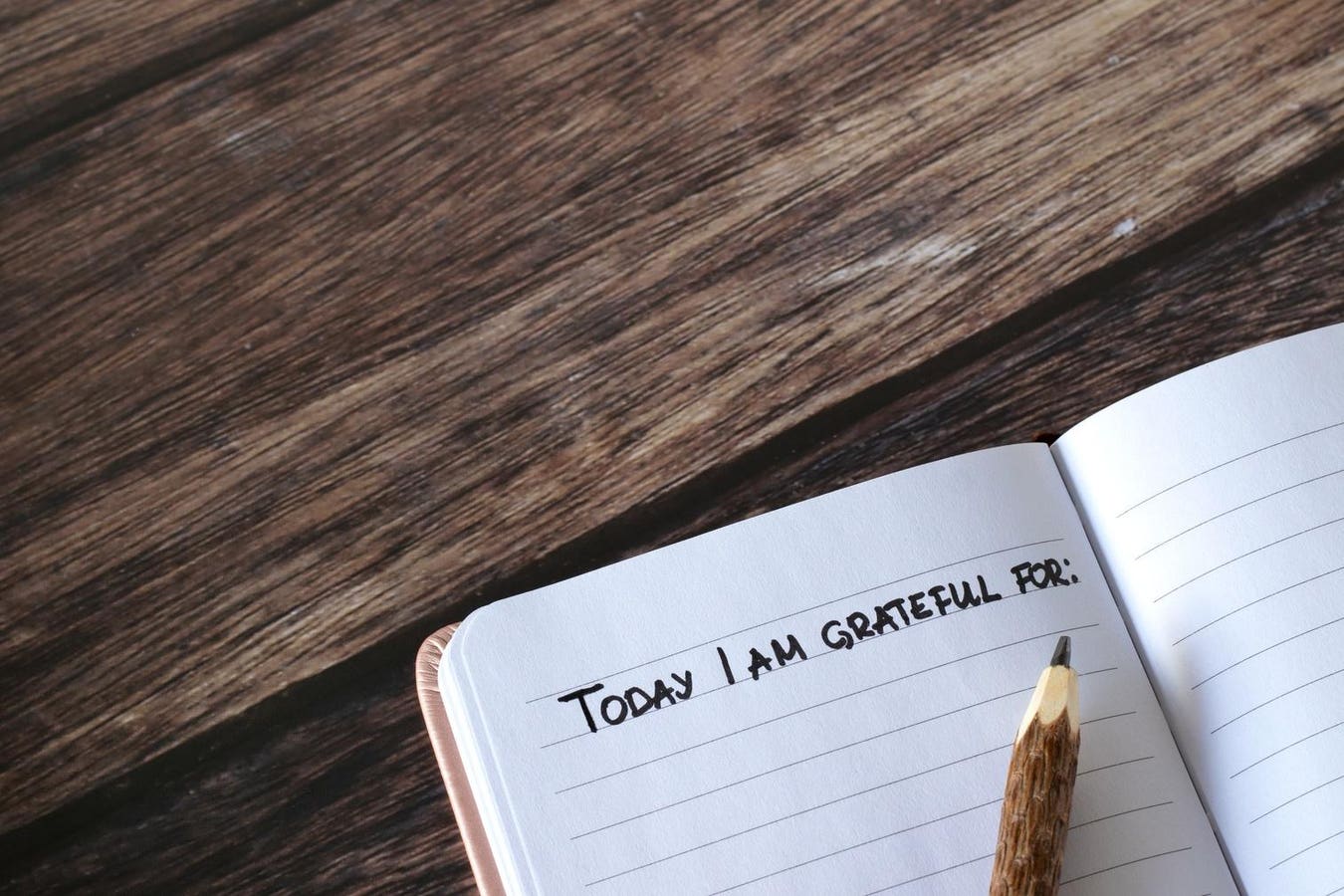
Meeting with friends for lunch this week, I had the pleasure of hearing them reflect on their lives, their marriage, their children (and grandchildren), their work (nearing retirement), and their financial situation (which is likely better than they’d ever imagined). Theirs was not a superficial, passing gratitude that was expressed, but a deeper, hard-earned sense of contentment and enduring ease that they’re carrying into the Thanksgiving weekend.
Having spent the entirety of my career in wealth management, predominantly serving those whose financial circumstances range from very good to very very good, I can assure you that this isn’t necessarily the norm. Indeed, gratitude can be just as elusive for those who have “won the game” financially as it can be present for those whose stories are marked by tragedy or loss, either visible or obscured.
And I’m reminded that of all the factors that we, as humans, have in common, chief among them may be that some degree of pain or loss is the most universal of all connectors. Without this acknowledgement, however, it seems to render the more fleeting mentions of thanks this time of year as hollow platitudes, doesn’t it?
So, what does a grittier version of gratitude look like? And is it possible that genuine thankfulness is something that persists not just in spite of our hardships, but because of them?
Let’s consider this from a scientific, philosophical, spiritual, and practical perspective and see what we find.
Creating A Psychological Immune System
For starters, Robert Emmons’ at UC Davis conducted a 21-day gratitude intervention with participants who were all suffering from chronic neuromuscular disease. Despite not experiencing any improvement in their physical circumstances, the intervention resulted in greater high-energy positive moods, feeling more connected to others, better sleep, and more optimistic life ratings. And yes, those with the chronic condition who embraced the intervention ended up reporting even higher levels of gratitude than the control group who suffered from no such condition.
The key insight from Emmons’ research is that the practice of gratitude builds a sort of psychological immune system, even before we need it, to cushion us when we inevitably fall.
Viktor Frankl’s “Tragic Optimism”
Psychotherapist, Holocaust survivor, and author of Man’s Search For Meaning, Viktor Frankl, takes it a step further, suggesting that pain, itself, might be the path to greater gratitude. Frankl references the “tragic triad”—pain, guilt, and death—that certainly can and do create ready anchors for a vicious spiral into pessimism and depression, but that can also be the catalysts for personal growth when met with courage and purpose.
While Frankl doesn’t recommend seeking out suffering, he believed that unavoidable suffering could be the most productive path to a meaningful life, because only suffering forces us to change ourselves and our attitude toward our situation.
“I speak of a tragic optimism,” Frankl wrote, “an optimism in the face of tragedy and in view of the human potential which at its best always allows for: (1) turning suffering into a human achievement and accomplishment; (2) deriving from guilt the opportunity to change oneself for the better; and (3) deriving from life’s transitoriness an incentive to take responsible action.”
Frankl’s words have always struck me as particularly potent because they’d be so much harder to accept if he hadn’t written them from a German concentration camp during World War II, after losing everything, including his family.
This Isn’t “Toxic Positivity”
I hope you see that this is not the paper-thin gratitude born of Instagram affirmations, and indeed, there is such a thing as “toxic positivity.” Paul Wong, a research psychologist considered to be one of the leading authorities on Viktor Fankl’s logotherapy, explains:
“The direct pursuit of happiness-enhancing activities as the final life goal may be counter-productive. It may lead to toxic positivity…furthermore, unexpected things happen, and fate intrudes. Numerous unexpected undesirable events, such as life-threatening sickness, accidents, death of a loved one, or the pandemic, can derail even the best evidence-based plans for happiness and success.”
But he continues, “True positivity is to discover the moon and stars in the darkest night.” Wong concludes that “for optimism to be stable, it needs to confront the negative reality…Such mental toughness better prepares one for the battles ahead than the false expectation that life is like a cakewalk or a joyride in Disneyland.”
This isn’t a new insight. Ancient wisdom traditions arrived at the same conclusion centuries ago.
Anticipating And Redeeming Suffering
The Stoic philosophy, premeditatio malorum, actually suggests that we should pre-meditate the evils that may befall us. Author Ryan Holiday says:
“The Stoic doesn’t see this act of negative visualization as pessimistic, but simply a feature of their self-confident optimism: I’m ready to face anything that happens and I’m also ready to do the work necessary now to ensure I don’t waste energy on problems that could have been solved in advance.”
Meanwhile, the Christian tradition has long held central the notion of redemptive suffering. “A carefully cultivated heart will, assisted by the grace of God, foresee, forestall, or transform most of the painful situations before which others stand like helpless children saying ‘Why?’ wrote the late Professor Emeritus of Philosophy at USC, Dallas Willard. And the ever-quotable C.S. Lewis, in his book, The Problem of Pain, insists:
“We can ignore even pleasure. But pain insists upon being attended to. God whispers to us in our pleasures, speaks in our conscience, but shouts in our pains.”
A Personal Pain
Candidly, sometimes I wish He would keep it down a little with the shouting. You see, I’ve been suffering from chronic migraines—roughly 50% of the days of the month, sometimes more—for about 30 years now. I’ve seen at least eight different neurologists and been stuffed with scores of competing medications. I’ve undertaken numerous surgical procedures, experimented with several alternative medical techniques, submitted to numerous psychological exercises, and undertaken multiple rounds of healing prayer. I’ve taken steps most would consider drastic with my sleep, diet, and exercise, all to be sure I’m doing everything I can to rid myself of that which plagues me personally.
I’d be lying if I said it didn’t get me down. But I’m also happier than I’ve ever been. I feel close to my Creator, have a spouse I adore and children who make me proud, and I get to do meaningful work every, single day.
My personal pain reminds me of the challenges that I know accompany everyone, including you, whatever your thing, or things, are. It reminds me that I’m not alone in my suffering, and that pain may be the universal human connector. And yes, it is precisely within the framing of my personal pain that my blessings are seen in the sharpest contrast.
I’m not just optimistic; I’m a practiced, if not weathered, optimist. I’m not just grateful; I have an enduring gratitude made grittier not just in spite of my challenges and travails, but because of them. And I wish the same for you this Thanksgiving.
Read the full article here