



Entrepreneur
Key Takeaways
- AI is already transforming businesses from the ground up. It’s the operating system of modern companies. Businesses that wait for a perfect strategy will lose to those that learn fast and move faster.
- Companies succeeding with AI build around outcomes (not hype), empower every employee (not just technical teams) and have created a culture that rewards AI experimentation.
- Build personal AI fluency within your employees, equip every department with AI workflows, align AI with strategy, governance and data, and make AI the default mode of work.
Your business is already becoming an AI company even if you haven’t planned for it yet. Across industries, teams are quietly adopting AI tools to write content, generate insights, automate tasks and make decisions faster than ever. Marketing teams are using AI to produce campaigns in minutes. Sales teams are analyzing pipelines with personalized AI copilots. Developers are building features with AI-first workflows.
This shift isn’t waiting for leadership approval. It’s happening from the ground up, and it’s accelerating. AI is no longer a technology conversation. It’s a business transformation conversation. And companies that wait for a perfect strategy will lose out to those that learn fast and move faster.
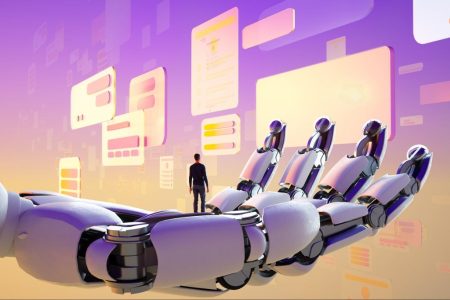
AI isn’t the next chapter of digital transformation. It’s the operating system of the modern company.
Related: Why Entrepreneurs Need to Adapt and Utilize the Power of AI Right Now
The real shift: From tools to intelligence
Most companies think that becoming an AI company means adopting the right AI model or platform. But the real shift is deeper. AI isn’t just software; it’s intelligence woven into every workflow, every role, every decision.
When we look at the companies succeeding with AI today, the pattern is clear:
Step 1: Start with outcomes, not algorithms
Leaders don’t ask, “What AI tools should we buy?” They ask, “Which business outcomes matter most this quarter?” Faster sales cycles, lower operating costs, better customer experiences and higher employee productivity. Build AI around these outcomes, not around technology hype.
Step 2: Empower every employee, not just technical teams
AI is becoming the universal skillset, just like email or the internet was. The companies winning today are the ones investing in AI literacy across marketing, finance, operations, HR and field teams.
Step 3: Create a culture that rewards AI experimentation
AI rewards speed. Companies need structures that encourage testing, learning and rapid adaptation, not long approval cycles. AI isn’t replacing teams, it’s elevating them. Companies that adopt this mindset see AI not as a threat to jobs, but as a multiplier of human creativity and operational excellence.
A practical framework: The STEP method
Let me introduce the STEP Framework, a simple model any organization can use to scale AI quickly and responsibly:
1. Self: Build personal AI fluency within your employees
AI transformation begins with individuals. Every leader needs a hands-on understanding of how AI accelerates their work. Not theory, practice. The companies that move fastest are the ones where executives actively use AI daily.
2. Team: Equip every department with AI workflows
The next layer is team-level transformation. Marketing, sales, finance, HR, support; each function needs tailored AI use cases and guardrails. This is where AI shifts from experimentation to measurable impact.
3. Enterprise: Align AI with strategy, governance and data
Enterprise AI is about scale, not just tools. This is where governance, privacy, security and data readiness matter. Companies must define how AI decisions are logged, validated, monitored and improved. Modern AI requires enterprises to treat data as fuel.
4. Productivity: Make AI the default mode of work
This is where AI moves from pilots to business results. AI becomes embedded in daily workflows like autonomous agents that handle routine tasks, copilots that support deep analysis, intelligent automation that reduces friction and insights delivered to every employee in natural language. This is when AI becomes the operating system of the company.
Related: AI Is Creating New Winners and Losers. Here’s How Smart Leaders Are Restructuring to Get Ahead.
Why this matters now
Every major industry is on the edge of an AI inflection point. But the real competitive advantage isn’t simply using AI. It’s using AI with intention, discipline and speed. Companies that succeed with AI are not the ones spending the most money on models. They’re the ones that understand that data is the foundation of every AI outcome. AI is no longer optional. It’s inevitable.
The next generation of market leaders will be the companies that move from AI pilots to AI workflows and from AI workflows to AI strategy. This is the real shift to becoming an AI company. AI will not replace leaders. But leaders who use AI will replace those who don’t.
Key Takeaways
- AI is already transforming businesses from the ground up. It’s the operating system of modern companies. Businesses that wait for a perfect strategy will lose to those that learn fast and move faster.
- Companies succeeding with AI build around outcomes (not hype), empower every employee (not just technical teams) and have created a culture that rewards AI experimentation.
- Build personal AI fluency within your employees, equip every department with AI workflows, align AI with strategy, governance and data, and make AI the default mode of work.
Your business is already becoming an AI company even if you haven’t planned for it yet. Across industries, teams are quietly adopting AI tools to write content, generate insights, automate tasks and make decisions faster than ever. Marketing teams are using AI to produce campaigns in minutes. Sales teams are analyzing pipelines with personalized AI copilots. Developers are building features with AI-first workflows.
This shift isn’t waiting for leadership approval. It’s happening from the ground up, and it’s accelerating. AI is no longer a technology conversation. It’s a business transformation conversation. And companies that wait for a perfect strategy will lose out to those that learn fast and move faster.
The rest of this article is locked.
Join Entrepreneur+ today for access.
Read the full article here